Shanghai: When the "reshuffle" of supermarkets and convenience stores is going on.

  Shops and convenience stores in Shanghai are being reshuffled.

  Carrefour has been operating in China for more than 20 years, and the new owner has been replaced by Suning; Metro, which entered almost at the same time as Carrefour, is also looking for the receiver of China business … … Even ordinary consumers can clearly feel this change when walking on the street — — Traditional hypermarkets such as e-mart and Tesco are gradually withdrawing from the downtown area and being replaced by various new supermarkets and convenience stores. Among them, there are foreign brands such as ALDI, the century-old supermarket chain in Germany, Costco, the second largest retail supermarket in the world, and new brands hatched by domestic capital such as Pick’n Go, Suning Store, Ole’s boutique supermarket and G-Super. Shanghai’s supermarket industry has become more and more lively.

  Every round of survival of the fittest, Shanghai’s supermarket industry is evolving itself. Every brand is constantly trying and growing in this new era of consumption, letting go of the game between technological upgrading and business model change. And all business comes from the most basic variable, the consumer.

  ■ Wen Wei Po reporter Xu Jinghui

  Giant game

  Those who can’t run fast will eventually be eliminated

  In the early 1990s, the supermarket format entered Shanghai for the first time, and it has reached the stage of standing in the thirties. However, this mature system is not calm, and "undercurrent surging" is the most appropriate adjective to describe the current state of this industry.

  At the end of last month, Suning.cn announced that its wholly-owned subsidiary Suning International planned to invest 4.8 billion yuan to acquire 80% shares of Carrefour China, thus swallowing this "behemoth" with an operating income of nearly 30 billion yuan in China. Not only Carrefour, but also the "Big Mac" supermarkets in the past seem to have a "middle-aged crisis". Lotte, e-mart, Tesco and other brands have withdrawn one after another, while Metro has been seeking to sell its China business … …

  The "vacancy" in the market has been replaced by new brands with stronger capital. Box Ma Xiansheng, hatched from Alibaba, became the main store for major shopping centers in just three years, and successfully embarked on the "C position"; Tencent invested heavily in Yonghui’s new format "super species", which expanded rapidly nationwide; Greenland Group’s G-Super Greenland, which lays out the retail industry, is preferably fully expanded in first-and second-tier cities, with 31 stores opened in Shanghai alone … … These supermarkets rooted in shopping centers have gradually replaced the original "single-family" hypermarkets.

  The same situation also appeared in the convenience store industry. Many years ago, small convenience stores such as Keke, Haode, Liangyou and Diatiantian, which were all over the streets of Shanghai, were shrinking, while Japanese brands such as Family and Rosen developed steadily, while a number of new brands such as Suning Store and Convenience Bee rose, with the blessing of giants such as Suning, Tencent and Gaoyou Capital.

  Looking at the reshuffle of the supermarket industry, behind the giant game is actually the transformation of business philosophy: when the development and reform of a format can’t beat the market and consumers, it will inevitably go downhill. In the past, the supermarket format faced a market that had not been developed by e-commerce, and consumers had to rely on the offline shopping environment. Therefore, the intensive and one-stop shopping environment was favored. With the impact and integration of e-commerce, the past business model has been difficult to meet the needs of current consumers.

  The re-opening of the supermarket industry, the traditional hypermarkets represented by Yonghui and RT Mart, and the new brands represented by Boxma Xiansheng, have similar paths — — Seamless online and offline links to speed up home service. In March last year, RT Mart’s "online ordering and offline delivery" service was fully rolled out. Bin Yuan, a new retailer in RT Mart, revealed in an interview that although this transformation is difficult, the effect is quite obvious after the integration of online and offline, which not only greatly improves the efficiency, but also makes the consumer structure younger, which is the most desirable change of traditional hypermarkets.

  Consumer competition

  Adjust the strategy according to consumer preferences

  In this round of reshuffle, the change of business model comes from the most basic variable of consumers. A report from Deloitte shows that the rapid economic development in China has stimulated the consumption demand of the younger generation. Different from the previous generation of consumers, young consumers pay more attention to convenient, personalized and high-quality shopping experience.

  Judging from the shopping habits of the main consumers, such as post-80s, post-90s and even post-00s, they are fundamentally different from the previous generation: post-80s and post-60s like to browse the promotional advertisements stuffed into mailboxes in supermarkets, then get on the free shuttle bus early in the morning and buy all the discounted daily necessities at once in the stores. However, the post-80s and post-90s are not like this. As far as their eyes are concerned, the "June 18th Promotion" and the "double 11" online carnival are the two major shopping labels at the middle and end of the year, respectively. Those daily necessities such as paper towels, toiletries and baby diapers are purchased at a low price at one time. Even if they "improvise" and move their fingers, these standard products can basically be purchased from all over the country in one day.

  The change of consumers’ shopping habits has a great impact on hypermarkets. Some surveys show that in first-tier cities, the frequency of young consumers going to large supermarkets can be calculated by "month", which makes the "Big Mac" have to make strategic adjustments around the changes in consumer demand.

  At present, a relatively successful adjustment model is the development of large-scale enterprises with ultra-miniaturization. For example, Easy Carrefour is a successful case. Its most obvious benefit lies in cost saving. On the one hand, those goods with high online shopping rate gradually withdraw from the shelves, greatly reducing the area of the supermarket; On the other hand, these supermarkets, with an area of about 1,000 square meters, mainly focus on fresh food, imported food, beverages and other products with high repurchase rate and instant consumption, which can filter the positive impact brought by e-commerce to the maximum extent.

  The development of large-scale supermarkets towards miniaturization is also helpful to its site selection. Previously, "Big Mac" stores loved "single-family" stores, with all kinds of parking lots and shuttle buses. Now, entering shopping centers is not only easier to operate than big stores, but also easier to reach young consumers, and it is also convenient for large-scale expansion.

  From a deep perspective, the miniaturization of big stores is also a reasonable combination of the whole supply chain to optimize in depth. Nowadays, these scattered supermarkets are already composed of two parts — — Front store and back warehouse. The function of "front store" further flies away in the direction of "emergency+experience", such as fresh products, beverage products and so on; The "back warehouse" has turned into a "front warehouse" for online shopping users, stocking according to big data and responding to online shopping needs.

  Cost bottom line

  Looking for breakthrough direction in "actuarial science"

  The reshuffle of Shanghai Shangchao format is also closely related to cost. At the end of 1990s, when the first batch of hypermarkets entered Shanghai, they signed multi-year leases in one breath. Now, most of them quit because the leases expired and they could not afford high rents.

  But the latecomers also have to face the cost game — — The premise of any business model is profitability. In the era of supermarkets with high rents and high labor costs, new solutions are needed.

  Starting from the "variable" of consumers, fresh products with high gross profit have become the main direction of major brands. In this matter, as big as box horse fresh, super species, Ole’ Boutique supermarkets, as small as Suning stores and Haode convenience stores, are all making efforts. As a matter of fact, the fresh-keeping strategy has achieved very good results in the early stage. This kind of goods with high repurchase rate and high gross profit margin can directly drive profit growth. Fresh products have made extremely important contributions to the reason why Box Horse Fresh Life’s first store in China can realize single-store profit so quickly.

  However, we have to pay attention to the fact that when all brands are heading for running all the way, the rapidly saturated market makes this once-tried-and-tested model "kick the iron plate". Box Ma Xiansheng has closed its store for the first time this year, and Wanda Store in Wujiaochang, the first store of Yonghui Yunchuang’s super species in Shanghai, has recently closed its doors. According to Suning.cn’s financial report, the loss of Suning Store only reached 296 million yuan in the first seven months of 2018. With the rapid expansion of the store, this loss will expand sharply. How to stop loss will be a difficult problem that these brands must face.

  To cope with the high cost, another way to solve the problem is to replace manpower with technology. For example, the newly-emerging brand Convenience Bee is equipped with unmanned payment equipment in all stores in Shanghai. In convenience stores that are open 24 hours a day, the work of the night clerk is mainly to receive goods, replenish goods, tally, etc., and the cashier work is replaced by intelligent technology equipment.

  Before this, unmanned supermarkets were indeed booming. In 2017, Taobao’s "Amoy Coffee" became popular at the Creation Festival. Since then, all parts of the country have tried water without retail. However, from the current development, the cost of artificial intelligence is much higher than that of labor, which hinders the promotion of unmanned supermarkets. A retired employee of Binguo Box, an unmanned convenience store, told reporters that the company started to lay off employees at the end of last year, and it has plummeted from more than 500 people at its peak to more than 100 people now. However, Wei Xueqi, an associate professor in the Department of Information Management and Information Systems, School of Management, Fudan University, believes that the launch of the 5G commercial tide will be of great help to unmanned supermarkets in the next year or two. Once the technical cost can be greatly reduced, it will be able to support this new format. Accelerate development.

  In addition, it is also a strategy to open a shop in the suburbs where the land price is cheaper. Whether it is a Sam member store in Qingpu or Pudong, or a market opening guest who is about to open, it is such a prudent business. Andrew Miles, president of Sam member store’s China business, calculated an account for the reporter: the cost of opening a store in the suburbs is only half of that of an urban supermarket, while the sales volume brought by strict control of product quality can reach 5 to 10 times that of an ordinary supermarket, which gives the possibility of a virtuous circle of supermarket formats.

  Personalized development

  Thousands of stores and thousands of faces, to "change" to meet the trend.

  The transformation of Shanghai supermarket industry is far from over, because from this summer, a large wave of new stores will be unveiled in Shanghai — —

  At the end of June, Oleqi, a famous cheap supermarket brand in Europe, opened two offline stores in one breath and officially entered the retail battlefield in China.

  On July 2nd, Box Horse opened a new convenience store in Shanghai — — Pick’n go, the "smallest" box horse store in history, covers an area of less than 20 square meters. It is mainly engaged in fresh food and is also the latest attempt of box horse.

  On July 4th, Yonghui Supermarket "Market Life" opened in Sanlin Impression City, Pudong, with the combination of traditional market culture and fashionable and modern farmer’s market decoration as its selling point.

  In late July, Yonghui Supermarket’s first mini community store will soon land in Nanxiang, Jiading, which is also a new exploration of Yonghui Supermarket after "super species" … …

  New brands emerge one after another, and "change" is the only constant theme. Hou Yi, CEO of Box Horse Fresh Life, once said that in addition to Box Horse Fresh Life, they are actively exploring new formats such as Box Horse Vegetable Market and Box Horse mini, and studying the best format model in different cities, different regions, different population densities and different scenarios, so as to make strategic reserves for the development in the next decade.

  Not long ago, Convenience Bee got the first hot meal business license of convenience store in Shanghai. Nowadays, in every store, you can see a hot meal sales area enclosed by a glass curtain wall, which is equipped with steaming oven, cleaning and disinfection washing pool, warm water heat preservation cabinet and other equipment and facilities for supplying hot food. After the hot meal is heated, it can be stored in the warm water heat preservation cabinet, which can maintain a constant temperature, which means that no matter the first guest or the last guest, they can get the meal with the same temperature.

  At the same time, theme stores and exclusive imported goods are also important "playing methods" for major brands. At the end of May, Rosen’s first Hello Kitty theme convenience store in the world opened in Nanjing East Road subway station. Before that, this convenience store had launched theme stores such as "Shanghai Football", "Teddy Bear" and "Detective Conan" to attract consumers to stop. The G-Super Green Space Optimization is based on the spillover effect of the import Expo, trying to improve its core competitiveness while introducing more new overseas products and bringing global good goods into the domestic market more efficiently.

  In the ever-changing, Shangchao industry is working hard in the direction of segmentation and personalization. These differentiated explorations may become the keys for brands to settle down in the future. Liu Min, deputy director of the Shanghai Municipal Commission of Commerce, said that the retail industry in Shanghai experienced the last round of information technology development, and now it has returned to quality and service again, forming a positive spiral upward trend, which will bring brand-new vitality and energy to the supermarket industry in Shanghai.

"Thunder Shazam 2" Nemesis arrival villain army into a circle powder weapon


1905 movie network news DC superhero movies are being shown all over the country! A few days ago, the film exposed the footage of the "Nemesis" feature film. In order to seize the staff of the gods, the two goddesses, Hespera and Calypso mythology, did not hesitate to attack innocent people, and the crowded museum instantly turned into a human purgatory.


Revenge grabbed the staff and turned the audience behind the scenes.


In the exposed "Nemesis" clip, the daughters of the giant god of ancient Greece, Hespera and Calypso mythology, came to a museum in Greece. They had a clear goal and went straight to the staff of the gods in the center of the exhibition hall. After the two men contacted the staff, their combat power value was instantly filled up. However, just when some clueless human beings came forward to stop him, Calypso mythology exerted the "power of chaos" on the spot, which made the victim lose his mind and become crazy, and then began to harm other innocent people. In a flash, screams and cries for help kept coming from the museum, while the two goddesses calmly withdrew from the chaos.


In fact, as the actor of the powerful villain in the film, the private harmony is completely different. As soon as they changed their cool style of painting, they were more funny on the set, and the sense of contrast in and out of the play directly fascinated the audience. Regarding how to understand that his role is defined as a villain, helen mirren once wittily explained in an interview, "I never thought we were villains, we were heroines, and I always thought that the goddess’ shirt should be an elegant white dress, but I didn’t expect it to be a pair of heavy armor"! Liu Yuling, who joined the DC universe for the first time, doesn’t care much about villains. What she values more is being able to join the "Shazam!" film series and formally become a member of DC, and she can compete with a goddess-level actor like helen mirren. In Liu Yuling’s own words, it is — — Is this heaven? The fatal charm of the two Nemesis is waiting for the audience to come to the cinema to experience it in person!


The villain army turned into a circle, and the audience shouted "It’s worth two brushes"


Thunder Shazan! As a return work, Wrath of the Gods has not only made brand-new adjustments and upgrades in visual effects production and plot setting, but also significantly improved the establishment of the main creative team and role conflict. Among them, the most enthusiastic response from the audience and the hottest topic of discussion are about the cast of Nemesis and the newly added monster legion. In this regard, producer Pete Safran once mentioned in an interview that "a comic adaptation film must have a strong villain to be wonderful, so we found top Hollywood movie stars such as helen mirren and Liu Yuling to play the daughters of Atlas, the giant god, and their wonderful performances made the drama of gods versus gods more shocking and eye-catching". Not only that, the joining of the Monster Corps this time also won the appreciation of a large number of audiences. Not only did the details of the special effects production show great points, but the scene of the monsters’ collective dispatch made the war more exciting and exciting, and the audience watched it quite well.


The movie "Thunder Shazan! The Wrath of the Gods is directed and starred by Liu Yuling and helen mirren. The film is being released nationwide!


Tianjin: new consumption experience, drawing a new picture of golden week economy

Xinhua News Agency, Tianjin, October 6th
Xinhua News Agency reporters Song Rui and Ma Bowen
In the golden autumn of October, the first two-dimensional immersive experience hall in Tianjin welcomed the first guests at the Xiannong University of Wudao in Heping District, Tianjin. With the official appearance of pop-up shop’s theme "Meow Meets Coffee" in Dali Temple Journal during the National Day holiday, the audience is no longer just a "bystander" of this domestic animation work, but can really walk into the story and be "in the same box" with the characters.
Walking into the store is like stepping into the parallel time and space of animation. A large number of original surroundings are displayed next to the bar, which provides fans with rich collection options. Cosplay free travel, role interaction and other activities attract many anime fans to make an appointment on social media in advance.
"The secondary culture conforms to the consumption pattern of a new generation of young people, and the linkage between Tianjin local national tide animation and Tianjin historical district has brought new consumption experience." Yang Kun, general manager of Tianjin Eco-city Industrial Park Operation Management Co., Ltd. said.
In Tianjin Geely Building, the National Tide Quangan Theater of "Mysteries of the Tang Dynasty Westbound" also attracts tourists. The theater is based on the real scene of the Tang Dynasty and integrates VR technology to create an immersive experience. The audience put on the VR head display, and with the changes of light, shadow and sound effects, it seems to cross the Millennium Chang ‘an and embark on a fantasy journey.
Citizen Dong Li came to experience with her mother: "I have never seen this form before. It is very novel, with the dynamic effect of wind and rain, which is particularly real. The picture of VR glasses is very clear and it feels like being there. "
The theater is based on the popular network drama "The Mysteries of the Tang Dynasty", which expands the new space of cultural consumption through "national tide+immersion experience" and further activates the market potential of traditional cultural IP.
"We hope to make traditional culture’ live’ through cutting-edge technology." Jiao Tianyu, assistant general manager of Tianjin Centennial Zhongyuan Commercial Development Co., Ltd. said, "This project is not only an entertainment experience, but also an innovative attempt of cultural inheritance, which has greatly stimulated young people’s love for traditional culture."
As night falls, the lights of the amphitheater in Tianmei Art District, Hebei District, Tianjin are getting brighter, and Cao Yu’s classic plays are being staged. The circular layout of the theater makes the audience and the actors "zero distance", and the scenery and props are close at hand-the teacups on the table, the paintings on the walls, and the clothes placed by the actors when they walk, all of which make people feel like they are in the living room on that rainy night.
The gallery lights outside the theater continued the aftertaste of the drama. The special drama exhibition "From Front to Behind the Scene" shows props, costumes and manuscripts of stage plays over the years. The audience can personally touch these "silent actors" and feel the vitality of drama art.
"We hope that through curation, the story of the stage will continue into life. After watching the performance, the audience can continue to feel the story behind the scenes. " Jiang Dafang, chairman of Tianmei Art District Operation Company, introduced.
In the "rejuvenated" China Grand Theatre, a lively and immersive "National Day Recreation Party" was staged here. The entertainment club will continue the city memory of the old theater, and let the audience enjoy tricks and flash performances of Beijing opera between the stage and balcony with a walking tour experience.
During the holiday period, Tianjin launched the 6th Nightlife Festival, Haihe Reading Season, Vibrant Hexi Nezha International Consumer Carnival and other special activities around the theme of "Night Tianjin City" and "Golden Autumn Consumption Season". Cafes and cultural and creative stores extended their business hours to attract more tourists to "punch in".
In Tianjin Italian style area, bookstores are no longer just quiet corners. Zhong Shuge Tianjin Store, which won the international architectural award, ushered in its first anniversary of opening, and the book overflowed the store door and extended to a "mobile bookstore". People read and communicate with the aroma of coffee and music, and feel the unique charm of "the city is the study".
"In the past, visiting a book fair was to buy books, but now it is more like a cultural trip." Susan Wang, a tourist, said, "Walking and reading in the block market can not only choose books, but also buy coffee and cultural creation, which makes the experience richer."
Four days before the National Day holiday, 415 commercial and trade circulation enterprises monitored by Tianjin Municipal Bureau of Commerce realized a cumulative sales of 1.6 billion yuan, a year-on-year increase of 5%; The cumulative passenger flow was 10.855 million, up 4.2% year-on-year.
He Xiaoyang, director of the Consumption Promotion Department of Tianjin Municipal Bureau of Commerce, said that Tianjin is making good use of policy resources, insisting on scene innovation and content upgrading, and launching diversified consumption scenes of business, culture, tourism and sports exhibitions to continuously meet the personalized, diversified and quality consumption needs of citizens and tourists.
Source: Xinhuanet
Reporting/feedback

Chengdu, Sichuan: The traffic control department of the public security takes many measures to finely control traffic congestion and ensure smooth roads during holidays.

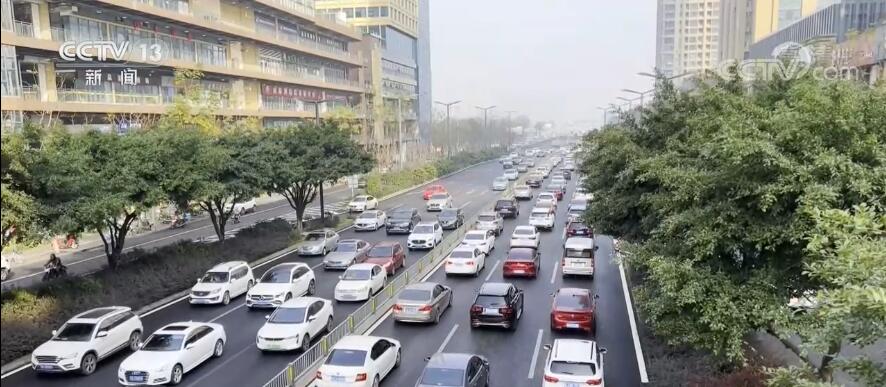
CCTV News:On the first day of the New Year holiday, Chengdu, Sichuan ushered in the peak of passenger flow. In order to effectively prevent and reduce the occurrence of road traffic accidents, the traffic control department of Chengdu public security has refined traffic congestion with the working mechanism of "fast, accurate and micro".

During the New Year’s Day holiday this year, most of Chengdu’s tourism is self-driving in surrounding cities, and the daily average number of motor vehicles on Jiannan Avenue in Chengdu exceeds 150,000.

Li Jinghao, Captain of the Third Brigade of the Sixth Branch of the Traffic Management Bureau of Chengdu Public Security Bureau:Before New Year’s Day, the centralized transformation of nodes and entrances and exits of Jiannan Avenue was carried out, and signal lights were set up to redistribute and adjust the flow of main and auxiliary roads.

In addition, Chengdu traffic police also use video inspection and intelligent transportation system to investigate and deal with illegal activities efficiently and improve the efficiency of road traffic operation.

Police of Chengdu Public Security Bureau Traffic Management Bureau Command Center Qi Bingsen:Collect traffic incidents every 10 minutes, properly handle the discovered incidents in time, and at the same time, collect and warn the peripheral traffic incident information based on the Internet big data platform, so as to ensure that we can discover the traffic incident information of the whole city more accurately and efficiently and ensure the safe travel of citizens.

Some rescuers lost contact in sudden rock collapse in chengdu-kunming railway.

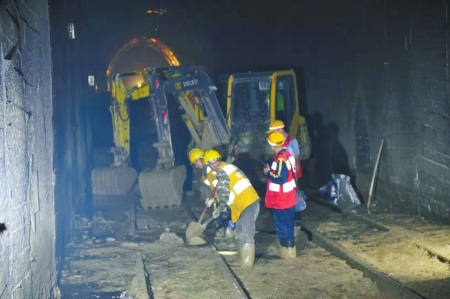
After the first two railway interruptions, rescue workers rescued in the tunnel.

After the first two railway interruptions, rescue workers rescued in the tunnel.

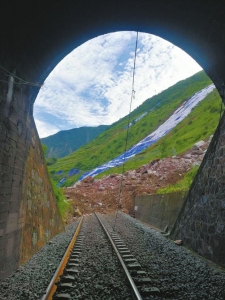
The railway at the tunnel entrance was buried.

The railway at the tunnel entrance was buried.

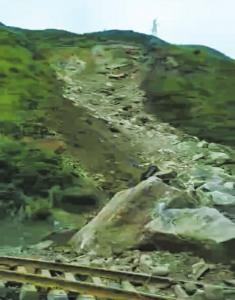
Rock mass collapse site on 14th.

Rock mass collapse site on 14th.

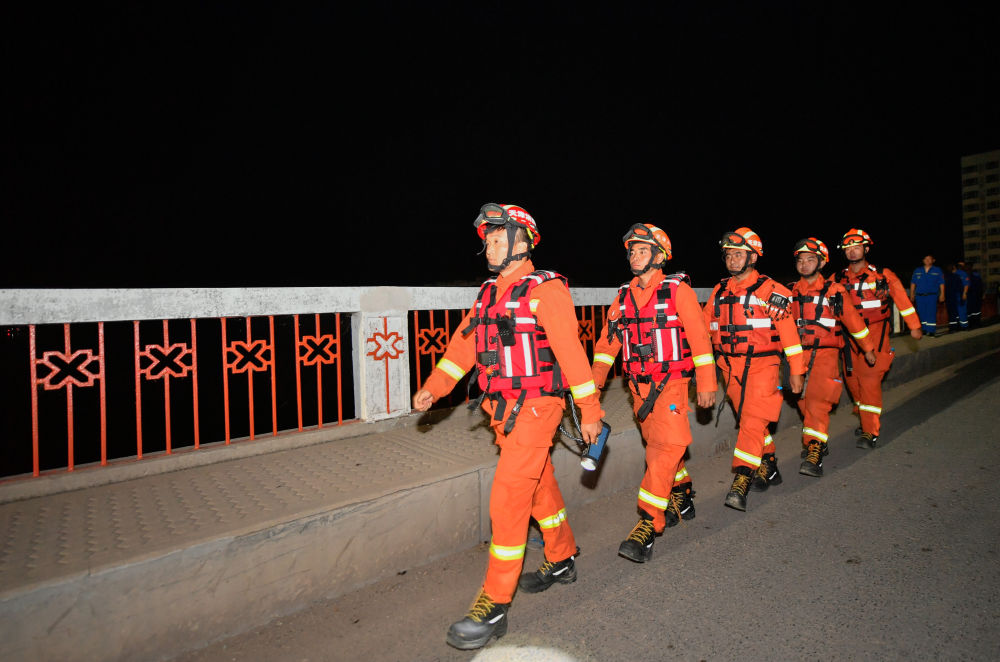
  At about 12: 44 noon on August 14th, tens of thousands of high rock masses suddenly collapsed between Lianghong and Aidai Station in chengdu-kunming railway, Ganluo County, Liangshan Prefecture, and the line was interrupted again, which led to the loss of some rescue workers on site. The exact number is being verified.

  Since the end of July, chengdu-kunming railway has been interrupted for three times due to heavy rainfall, and the Ganluo section of the line has been in the emergency recovery stage for half a month. According to the announcement of the railway department, the passenger train from Chengdu to Xichang will be suspended until August 30.

  During the interruption of chengdu-kunming railway, in order to ensure passengers’ travel, the railway department tried every means to tap the transportation capacity, reconnected the EMU from Chengdu East to Kunming South, and added ordinary passenger trains from Xichang to Panzhihua and Kunming, so as to facilitate passengers’ travel along the route to the greatest extent.

  Live video display

  A lot of earth and stone poured down from the railway.

  A tunnel entrance railway was buried.

  After the disaster, the railway department immediately launched a level I response, quickly organized forces, and worked with local firefighters to fully carry out rescue. At present, the collapse of the mountain continues, which has a great impact on the rescue work. The collapse caused the catenary to trip, the communication optical cable was interrupted, the railway line was buried about 70 meters, and the line was pushed about 20 meters.

  According to on-site rescuers, the place where the collapse occurred was near the area where the Chengdu-Kunming line was blocked by mudslides on July 29. It can be seen from the video taken at the scene that when the disaster occurred, a large number of earth and stone poured down from the mountain next to the railway, and smoke and dust rolled. After the collapse stopped, a large number of stones piled up at a tunnel entrance and buried the railway.

  At present, the rescue work for people who lost contact is in progress, and the Provincial Emergency Management Department has mobilized rescue forces such as the fire rescue team and the Ganluo Mine Rescue Team to carry out personnel search and rescue at the disaster site. At the same time, Liangshan Fire Brigade and Yingjing Mine Rescue Team also rushed to the scene to reinforce.

  Travel has little impact.

  Reconnect Chengdu East to Kunming South EMU

  Maximize the convenience for passengers to travel.

  Chengdu-kunming railway is interrupted, with the greatest impact on the Chengdu-Xichang section. According to the railway department’s notification, the suspension will last until August 30th. However, during the suspension of railway passenger transport, roads and routes are still operating normally.

  "In fact, it doesn’t affect me much, because I can still take the bus." Miss Li is from Xichang and currently works in Chengdu. She told reporters that after the opening of the high-speed bus from Chengdu to Xichang, there will be fewer trains, mainly because the train time is relatively long, which takes eight or nine hours at a time, while it only takes six hours if the car is not in traffic jam.

  In addition, in order to ensure the travel needs of passengers from Chengdu and Xichang to Kunming, China Railway Chengdu Bureau Group Co., Ltd. reconnected Chengdu East to Kunming South EMU and added ordinary passenger trains from Xichang to Panzhihua and Kunming to maximize the convenience of passengers traveling along the route.

  At present, there are 5 pairs of emus from Chengdu East to Kunming Nankai, and the emus take Chongqing and Guizhou to Kunming South Station. The whole journey takes 5 to 6 hours, and there are still tickets left. There are 3 pairs of ordinary passenger trains from Xichang to Panzhihua, and 1 pair of ordinary passenger trains from Xichang to Kunming.

  The freight was not completely interrupted

  Start the freight train after each rush.

  Products along the line can be shipped out quickly.

  Chengdu-kunming railway is a national railway I-class passenger and freight co-line railway connecting Sichuan and Yunnan in China. One of its important influences is to change the long-term isolation of ethnic minority areas in the deep southwest, transport local products to the whole country and even the rest of the world, and promote local economic development. Take Yuanmou County, Yunnan Province as an example, vegetables are not only supplied to Kunming and Chengdu, but also sold well in more than 150 large and medium-sized cities in China. Every year, more than 30,000 tons of onions, tomatoes, kidney beans and chives are exported to South Korea, Japan, Russia, the United States, the European Union and Southeast Asian countries through chengdu-kunming railway through entrepot trade.

  On July 29th and August 4th, chengdu-kunming railway was interrupted twice due to the continuous rainstorm. Although passenger trains were not opened immediately after the rush, freight trains resumed operation immediately. Therefore, the interruption of chengdu-kunming railway did not completely interrupt the freight along the route.

  Why is it interrupted frequently?

  The terrain along the line is steep and prone to geological disasters.

  The rain has been interrupted three times recently.

  In fact, as early as the early 1950s, when chengdu-kunming railway was built, the areas along the line were called "railway forbidden zones" by foreign experts, and it was long considered as an impossible place to build railways. The whole line runs through mountains and valleys with steep terrain, diverse topography and complicated geology, and passes through rugged and steep mountains and hills with towering peaks and dense deep streams. The area where the line passes is called "open-air geological museum".

  According to the forecast of Meteorological Observatory and the analysis of Sichuan Flood Control and Drought Relief Headquarters, there has been continuous heavy rainfall in Liangshan area where chengdu-kunming railway mainly passes recently, and some small and medium-sized rivers may have obvious flood process and exceed the warning water level, and local heavy rainfall is easy to cause mountain torrents and mudslides. In particular, the slope of Niuri River on the left side of the disaster-stricken area collapsed seriously, and many weirs in the river channel have not been alleviated. The slope surface washed by debris flow in some sections is still extremely unstable, and rainfall is prone to collapse, and even mudslides and cut slopes collapse again, which is also the reason why chengdu-kunming railway has been interrupted many times recently.

  First interruption: July 29th.

  At about 11: 00 on July 29th, floods and landslides occurred between Lianghong and Adai stations and between Ganluo and Nanergang stations in chengdu-kunming railway, which led to the interruption of the line. After 93 hours of fighting day and night, at 9 o’clock in the morning of August 2, the whole line of Chengdu-Kunming line was rushed through, and the freight train began trial operation.

  Second interruption: August 4th.

  At about 9: 40 a.m. on August 4th, due to the continuous rainstorm, a mudslide occurred again at K306 of the Narrow Bangou Tunnel in the chengdu-kunming railway Aidai-Lianghong section, and about 4,000 cubic meters of mud poured into the Narrow Bangou No.1 Tunnel, burying the line for about 1,000 meters, and the maximum depth of mud was nearly 3.5 meters, which led to the interruption of the line again.

  After the water disaster, Chengtie Bureau started the emergency plan as soon as possible, and successively assembled 400 personnel and 7 sets of machines and tools to put into emergency rescue work.

  On August 10th, after nearly 152 hours of continuous fighting day and night by rescuers, the water damage from Lianghong to Adai Station in chengdu-kunming railway was successfully repaired. At 18: 25 on the same day, the first train passed through the flooded area safely for 57,180 times, and the freight train transportation order was restored in chengdu-kunming railway.

  Third interruption: August 14th.

  Less than four days before the second emergency in chengdu-kunming railway, at about 12: 44 noon on August 14th, tens of thousands of high rock masses suddenly collapsed between Lianghong and Aidai Station, and the line was interrupted again, which led to the loss of some rescue personnel on site. After the disaster, the railway department immediately launched a level I response, quickly organized forces, and worked with local firefighters to fully carry out rescue. At present, the mountain continues to collapse, which has a great impact on the rescue work.

On the Security Dilemma in Northeast Asia from Three Key Variables

  The security of Northeast Asia is in a complicated state of high stalemate and sudden change, and in the turbulent vortex of global geopolitics. The author intends to extract several key variables, namely capital, power and the relationship between major powers, from many issues and elements related to the security dilemma in Northeast Asia, and investigate and analyze them.

  Capital is constantly alienated

  Marx repeatedly mentioned the alienation of capital to labor and capital in Economic and Philosophical Manuscripts in 1844, which provided us with a scientific and effective window to understand the essential characteristics of the capital world.

  After World War II, the world economic crisis similar to that in 1929 was not repeated, and the cyclical and staged crises of capital development were no longer so obvious. Even though the global financial tsunami occurred in 2008, it did not lead to the global economic depression. The main reasons are the self-repair mechanism of the capital world and the high-intensity human intervention after the system failed.

  However, after 2008, although human intervention effectively delayed the outbreak of the crisis on a global scale, the crisis has not been cured, but on the contrary, it is accumulating risks for the next crisis, so human society has entered a huge uncertain era.

  The reason why the current world is chaotic and full of conflicts and opposites is because the underlying logic of the world economy, namely capital logic, has undergone profound changes, namely capital alienation. Due to the constant alienation of capital, capital is alienated from the creator of wealth to the destroyer of wealth, from advocating interdependence to a hobby of conflict and war, from dependence on people’s needs to a crazy preference for military supplies, from hope and enthusiastic cheers for tomorrow to fear, despair and hostility for tomorrow.

  The disorder of the logic at the bottom of the world economy is constantly producing spillover effects, from economic crisis to social crisis, political crisis and international relations crisis at the regional and global levels. Under the impact of this storm of the times, those areas with long-standing problems left over from history, high concentration of various relationships and contradictions and very sensitive areas are most likely to become hot spots, as well as explosive and flammable areas of conflicts and wars.

  Northeast Asia, which has all the above characteristics, has therefore become the eye of the storm and the frontier of geopolitical conflicts in various times. How to solve the problem of various crises, including regional crises, caused by capital alienation is a major issue related to human development.

  Power moves eastward again.

  According to the British economist Angus Madison’s estimation of gross domestic product (GDP) of all countries in history, as early as 1000 AD, China and India accounted for two-thirds of the global economy, and the global economic center of gravity occupied a solid position in the East at that time. After more than 800 years, with the arrival of the British industrial revolution, the economic center of gravity began to shift to Europe, and then to North America, and the west became the center of the world. But Angus Madison believes that the global economic center of gravity is rapidly shifting to the east and south, and by 2025, the global economic center of gravity will return to the Far East as it did in 1000 AD.

  In the 1980s, human society kicked off the shift of the center of world power to the East, and Asian countries and regions rose one after another: Japan, the "four little dragons" and "four little tigers" in Asia, China, Viet Nam and India … … In particular, the rapid rise of China has promoted the development of the Asian region to an unprecedented height, and Asia has begun to enter a new era of overall rise.

  However, the eastward shift of world power is not smooth sailing, but accompanied by huge obstacles, resistance and risks. We can see that the process of world power moving eastward is still stubbornly evolving, which has not been interrupted by the epidemic and the comprehensive suppression of China by the United States. However, American and Western forces do not want to see the power moving eastward at an accelerated pace, thus ending the era when the West dominated the world. To this end, they began to join hands and start a global layout. Whether it is putting forward the "Indo-Pacific Strategy", NATO’s eastward expansion, the rise of various military alliances, or the prediction of the new cold war, etc., it is the product of western international politics under the background of the eastward shift of power, which is intended to comprehensively contain, block, delay or even terminate this historical process and move against the trend of the times.

  Northeast Asia, as the strategic support for the rise of the great powers in the East, has become the forefront of the East-West confrontation in the process of power moving eastward. The Korean Peninsula issue, the Taiwan Strait issue and the South China Sea issue have emerged one after another, all of which have become the fuse of confrontation and conflict between the East and the West, even the powder keg.

  At present, people are most worried about whether the Korean Peninsula or the Taiwan Strait and the South China Sea will become the next new battlefield after the Russian-Ukrainian conflict and the Palestinian-Israeli conflict, and whether the new Cold War Iron Curtain with the theme of so-called autocracy and democracy defined by the West will really come.

  Northeast Asia is under great pressure brought by the eastward shift of power, and the security situation is very grim. How to resolve the opposition and conflict between civilizations is a major issue of the times related to the future direction of human civilization.

  Adjustment of relations between major powers

  Northeast Asia is the intersection of the interests and contradictions of the United States, China, Russia and Japan. Under the great changes in the past century, the balance of power in the relations between world powers is undergoing major changes. The changes of power relations among big powers, the conflicts of interests among big powers and the strategic adjustment of their relations have become important variables for the security of Northeast Asia.

  In particular, Sino-US relations, as the most important relationship in today’s world power structure, are profoundly affecting the trend of global geopolitics and promoting the transformation of the world pattern. The trend of Sino-US relations plays an important role in the security of Northeast Asia.

  At present, Sino-US relations are in the process of deep strategic adjustment, and the security situation in Northeast Asia will also be turbulent due to this, and the future trend will be confusing. It is not ruled out that there will be a tense situation in stages. However, with the gradual adjustment of Sino-US relations or staged easing, the security situation in Northeast Asia will also change accordingly.

  Therefore, the security of Northeast Asia depends to a great extent on the adjustment of relations between major powers, especially Sino-US relations. How to resolve the crisis of relations between major powers is a major issue of the times related to human security.

  So, how can we resolve these contradictions?

  The supreme leader of president, China, put forward three major initiatives to the world one after another, which are highly targeted to overcome the factors that aggravate the security dilemma in Northeast Asia. For example, global development initiatives can resolve the fission of the times caused by capital alienation; The global civilization initiative can resolve the mutual agitation between eastern and western civilizations brought about by the eastward shift of power; The global security initiative can resolve the geopolitical opposition and conflict brought about by the big country game.

  (Wu Xinbo is the director and professor of the East Asian Studies Center of Shanghai International Studies University)

Great Love in the World —— The Heroic Spectrum of Wuhan’s Anti-epidemic Front Line

When the sea flows, heroes come forth in large numbers.

A sudden epidemic in COVID-19 made us know a group of ordinary and extraordinary people. In the fierce epidemic, they stood up with the courage to give up; Under the difficult test, they courageously retrogressed with determination and determination.

They are known as the anchor in the fog of the epidemic, as the captain at the helm of the ship fighting the epidemic, as the white soldiers fighting the virus, as the universal guardians in the closed community, and as the firefighters in the national war.

They are fighting fire and warm light.

"You are messengers of light, messengers of hope, the most beautiful angels and real heroes!" The praise of the Supreme Leader’s General Secretary expressed the respect of the whole society for fighting against the epidemic hero.

Let’s pay tribute to the cutest person in the new era!

Cross the sea and see the true colors.

The epidemic is fierce and the hero moves forward.

There are such a group of brave soldiers who are the first to go to the anti-epidemic battlefield. They are no longer youthful, but let the years shine with the light of youth forever; They rushed into a war without smoke, but they were the "most terrible opponents" on the battlefield.

This group of brave soldiers, including academicians Zhong Nanshan, Li Lanjuan, Wang Chen, Chen Wei, Qiao Jie, Zhang Boli, Huang Luqi, and Tong Xiaolin … They shoulder the mission, bear the burden, and charge the epidemic.

No ticket can be remembered by Chinese people like this high-speed rail ticket-the departure time is January 18, 2020, starting from Guangzhou South Railway Station and ending at Wuhan Station; No seat, make up the ticket; The ID number shows that he was born in 1936 and the passenger is 84 years old!

Academician Zhong Nanshan returned to Guangzhou after rescuing patients in Shenzhen that day, and was informed by the National Health and Wellness Commission to rush to Wuhan at noon. As the high-speed rail ticket has been sold out, he was settled in the corner of the dining car when he got on the bus temporarily. From this, there is another unforgettable photo for Chinese people-on the high-speed rail dining car, the old man closed his eyes, leaned his head on the back of the chair, and his face was full of fatigue.

As early as 17 years ago, when fighting against SARS, Academician Zhong Nanshan rushed to the forefront; Seventeen years later, although he was 84 years old, he went out again, and he was as sharp as before.

"There must be human-to-human transmission", "There are medical personnel infected" and "Don’t go to Wuhan without special circumstances" … It is this insight and outspoken old man who has sounded the alarm of prevention and control in the whole society and promoted the rapid change of epidemic prevention and control.

Participate in ward rounds, guide treatment, online consultation, judge the epidemic situation, and have video communication with international experts … Academician Zhong Nanshan is busy every day in the days of anti-epidemic.

Ms. Peng, a patient from COVID-19, Zhongshan City, Guangdong Province, terminated her pregnancy after 35 weeks of pregnancy. She suffered from acute respiratory distress syndrome (ARDS), septic shock, multiple organ dysfunction, etc. in the following two months, and was critically ill for many times, with ventricular fibrillation and cardiac arrest for 40 seconds.

In order to save her life, Academician Zhong Nanshan participated in the remote consultation. Under his guidance, Ms. Peng finally turned the corner. "It was a close call, thanks to the care of the medical staff and everyone." On March 31st, this critically ill pregnant woman in COVID-19, Zhongshan, who worried Academician Zhong Nanshan, finally ended the isolation and went home after two months of rescue.

"Vulcan Mountain, Raytheon Mountain, Zhong Nanshan, and the three mountains have gathered together to overcome difficulties; Domestic donations, overseas donations, Li Lanjuan, and many donations have come to the road. " This pair of popular couplets, the first part says that the person is Zhong Nanshan, and the second part says that it is a "goddess".

At 9: 00 on March 31st, the medical team of Academician Li Lanjuan, who had been in Wuhan for 58 days, set foot on the way back. When entering the waiting hall of Wuhan Tianhe Airport, hundreds of people at the scene shouted to 73-year-old Academician Li Lanjuan: "Goddess!" "goddess!"

"Goddess" is well deserved! When the epidemic situation was still confusing, she and a group of experts rushed to Wuhan to make a decisive suggestion for Wuhan to press the "pause button" through on-the-spot research on the epidemic situation.

Later, she led a team to recruit Wuhan again, "going to a place with severe illness", which greatly improved the success rate of treatment for critically ill patients. When inspecting the ward, Li Lanjuan often holds the patient’s hand and says, "Hold on, come on!" Send love and hope to patients and people who see and hear this scene.

Academician Li Lanjuan has a picture of a smile that has been circulated all over the network, and the clear indentation of the protective mask on his face has touched countless people. This photo was taken after she took off her protective clothing and mask at the East Campus of Wuhan University People’s Hospital. The indentation on the face is affectionately called "angel mark". Some people say that this smile gives people confidence and encouragement, which means hope and victory; Some people say that the indentation on this face is the "medal" of the ancient and rare old people who are rushing to the front line, and it is also a thrilling responsibility.

Many people may not have heard the name of Academician Chen Wei, but if you have seen Wolf Warriors 2, you will know that she is the prototype of Dr. Chen. In 2003, team Chen Wei took the lead in identifying the culprit of SARS in China. What makes her famous all over the world is that in 2014, she led the team to successfully develop the world’s first new genetic vaccine against Ebola virus, which is known as the "Ebola nemesis".

On the evening of March 3, a photo misunderstood by goodwill and good wishes was widely circulated on the Internet. In this picture with the caption "The first shot of vaccine, the academician tries first", Academician Chen Wei of the Institute of Military Medicine of the Academy of Military Sciences is sticking out his left upper arm for injection. The essay said: "The first Covid-19 vaccine was injected into Academician Chen Wei’s left arm today. Seven party member from the expert group also injected together. "

Some people cheered that the vaccine developed by Academician Chen Wei’s team has entered the clinical stage, but it is not a vaccine injected in the photo, but a drug that enhances immunity injected by Academician Chen Wei before going to Wuhan. Behind the photo, this "tough guy" female major general who went to Hubei to fight the epidemic did not live up to the expectations of the people of the whole country, and indeed wrote a Chinese answer sheet on COVID-19 vaccine development in Jianghan.

On January 26th, on the second day of the first lunar month, 54-year-old Academician Chen Wei led the expert group to Wuhan. Since arriving in Wuhan, she has concentrated on emergency scientific research on vaccine development. At 20: 18 on March 16th, the recombinant COVID-19 vaccine developed by Academician Chen Wei was approved to start clinical trials. On March 22nd, the first batch of 108 volunteers were injected with domestic COVID-19 vaccine.

"Treat each other with sincerity, and I’ll leave my courage here this time." This is what Academician Zhang Boli, who has been fighting against the epidemic in Wuhan, said to you after undergoing cholecystectomy.

On January 27th, on the third day of the first lunar month, Academician Zhang Boli, who was guiding epidemic prevention in Tianjin, was ordered to fly to Wuhan. Since then, he has been sticking to Jiangcheng. On February 18, he had to undergo surgery because of an old gallbladder disease caused by overwork. Three days after the operation, he insisted on returning to work.

On March 19th, Academician Zhang Boli, who has been fighting for more than 50 days in Wuhan’s anti-epidemic front, celebrated his 72nd birthday. On the same day, the National Health and Wellness Commission issued a notice saying that all newly confirmed cases, newly suspected cases and existing suspected cases in Wuhan were zero for the first time. Academician Zhang Boli said that this is the best birthday present.

These days, Academician Zhang Boli has held video conferences with foreign experts almost every day to introduce the experience of traditional Chinese medicine in preventing and treating COVID-19 and explore the trend of global epidemic; He put on protective clothing that said "Come on, Lao Zhang" and went to the rehabilitation station to take a pulse for the isolators. He was advised not to fight so hard at your old age. He said: "I really forgot how old I am, regardless of my age."

In the city of Wuhan, there are still many academicians who are at the beginning and the forefront of the fight against the epidemic.

On the afternoon of March 10th, Wuchang Shelter Hospital, the first shelter hospital in Wuhan, was officially closed for 35 days, which also meant that all 16 shelter hospitals in Wuhan were closed. This special hospital, which played a key role in the critical period of epidemic prevention and control in Wuhan, completed their historical mission.

The establishment of Noah’s Ark is inseparable from a key figure-Academician Wang Chen.

On February 1st, Academician Wang Chen rushed to Wuhan and saw the overloaded hospital. After a night of tossing and turning, he first proposed to establish a "shelter hospital" to collect all patients. The voice landed, and the first batch of three shelter hospitals opened after 48 hours. More than 4,000 beds provide a green channel for isolated patients at home. With the addition of more shelter hospitals, the designated hospitals in Wuhan are finally no longer "hard to find a bed", and even completed the counterattack of "beds and others".

"Fangcang Hospital is a key measure to fight the epidemic in Wuhan. I hope this model can enhance the ability of more countries to deal with COVID-19." Academician Wang Chen said in a video connection with his American counterparts.

"I’ll do it!" Hearing the call from the Wuhan front, Qiao Jie, academician of China Academy of Engineering and president of the Third Hospital of Peking University, did not hesitate at all, and rushed to the airport in a few hours. Academician Qiao Jie said: "We just set up a critical care unit with military orders, and we should seize this critical point of treatment, try our best to improve the cure rate and reduce the mortality rate." As the leader of the national medical team in Peking University to aid Hubei to fight the epidemic, Academician Qiao Jie and his colleagues from brother hospitals arrived in Wuhan and quickly set up the first critical care unit. The Third Hospital of Beijing Medical University, Peking University First Hospital, Peking University People’s Hospital and the medical team from Henan jointly undertook the medical treatment task. The whole process only took more than 30 hours. This elegant and warm-looking "female warrior" is called "Iron Man" by colleagues who control the overall situation.

"In addition to the Sino-French New Town Campus in tongji hospital, which we serve ourselves, there are also many critically ill patients in other hospitals who are turning to us and becoming the centralized treatment point for critically ill patients." On March 31st, 137 medical staff of Peking University Third Hospital led by Academician Qiao Jie still insisted on treating critically ill patients in Wuhan.

On January 25th, Huang Luqi, an academician of China Academy of Engineering, led the first national TCM medical team to come to Han and entered Jinyintan Hospital, becoming the first TCM medical team to take over the intensive care unit. By March 30th, in Jinyintan Hospital, Academician Huang Luqi had treated 158 patients with severe and critical illness, and 140 patients were cured and discharged. In the latest seventh edition of the diagnosis and treatment plan, the recipe for eliminating dampness and removing toxin developed by his team was included in the recommended prescription for critically ill patients in COVID-19.

As the leader of the national expert group on medical treatment of traditional Chinese medicine, Academician Tong Xiaolin visited many hospitals every day during his stay in Wuhan. Everywhere, the first thing to do is to go to the ward to treat patients, ask for advice, look at the tongue and feel the pulse, and never let go of every detail. From New Year’s Eve to Wuhan, Academician Tong Xiaolin has been fighting there for more than two months. He and experts went deep into the community, put forward the idea of moving the treatment gateway to the community, and drew up the "Wuhan anti-epidemic prescription" of traditional Chinese medicine, which played an important role in treating mild diseases and reducing the conversion from mild to severe.

Under the coordination of the Central Steering Group, 10 famous academicians and their teams gathered in Hubei, and most of them fought in Wuhan. They shoulder the mission of the country and the expectations of the people.

"This matter of the country is very important. The country needs us to go. We must go today!" This is a sentence from hit the floor when Academician Zhong Nanshan went to Wuhan.

"I am duty-bound to be a major event of the country." This is what Academician Li Lanjuan said on New Year’s Eve when he applied to the state to lead a team to support Wuhan.

"The epidemic is the military intelligence, and the epidemic area is the battlefield. I hope that I can fight the deadly virus in my life and open the door of hope for life in the trapped epidemic area. I believe that the speed of researchers in our country will not be inferior to that of the United States. " This is Chen Wei’s heartfelt words when he was interviewed by the media about the development of COVID-19 vaccine in China.

May I have this length to serve my country.

Brave front-line commanders are at the forefront of the "epidemic" of war.

In the eyes of medical staff, the dean at this moment is a brave captain and a brave front-line commander.

On the occasion of the outbreak, many heads of medical institutions were on the verge of death and led the team to charge. They bear double pressure, not only to save patients but also to protect medical staff, and they have to worry about everything from case consultation to material support.

These medical institutions are like a safe house, sheltering the lives of compatriots in the storm of the epidemic. They are brave and brave, and their dedication and sacrifice live up to the name of Chinese doctors.

Zhang Dingyu, president of Jinyintan Hospital in Wuhan, is known as the "Iron Man" in the eye of the epidemic storm. His hospital is the only infectious disease hospital in Wuhan, where the earliest COVID-19 patients were treated. Since the first batch of COVID-19 patients were admitted on December 29th, 2019, the battle for Zhang Dingyu has started.

The epidemic situation is urgent, and Jinyintan Hospital is the center of the epidemic situation in the city. Zhang Dingyu rests at 2 am every day and gets up at 6 am. Colleagues are used to this figure of doing things in a hurry and limping around the house. However, it was not until a month later that many people knew that he had been suffering from gradual freezing for two years and his life had entered the countdown. In the past, Zhang Dingyu always said that his knee was bad, but the epidemic was in the forefront, so he couldn’t say it. He said: "I have to run faster to win time;" I have to run faster to get more patients back from the virus. "

Zhang Dingyu, who is as hard as iron, sometimes cries. One day in late January, shortly after learning that his wife was infected with COVID-19, Zhang Dingyu decided to visit his wife, and suddenly burst into tears while walking halfway. "I may be a good doctor, but I’m not a good husband. We’ve been married for 28 years, and I’m afraid, too, that she won’t be able to carry her body and lose her!" Fortunately, his wife, Cheng Lin, was cured after treatment, and donated plasma after the expiration of the isolation period.

Two months later, on March 24, when seeing off the first batch of white soldiers in Fujian at Wuhan airport, Zhang Dingyu shed tears again. He hugged the medical team and said with a sob, "You are heroes who save the earth. You are all superhuman!"

Zhang Dingyu, who says others are superman, is superman himself. Dragging his sick body, he stuck to the front line step by step. He said to his colleagues: "We are already in the eye of the storm, and we must not back down at this time! What we have to do and can do is to treat patients, protect our people and protect our city! " As for himself, he said, "I can’t fall down at the moment when I am most eager."

Colleagues said that with Dean Zhang leading the way, the great things were also practical. Cheng Fang, head nurse of ICU on the sixth floor of South China, said with tears in her eyes: "What we can do is to fight like him!"

Liu Zhiming, one of the directors of the first designated hospitals in Wuhan to treat COVID-19 patients. On February 18th, 51-year-old Liu Zhiming died because he was infected with COVID-19.

Before living in ICU, Herry Liu spent three sleepless days. On January 21st, Wuchang Hospital was identified as the designated hospital in COVID-19, ready to receive the first batch of patients. Arranging patients and reforming wards, a series of urgent tasks are on the head. On the evening of January 22nd, Liu Zhiming and his colleagues were busy all night. Colleagues recalled that his health was not very good in those days, but he was worried about patients and often went to emergency and fever clinics, and could not get a rest.

On January 23, the transformation of the ward was basically completed, but Liu Zhiming was diagnosed with infection. Liu Zhiming called everyone he came into contact with, worried about infecting others. The next day, his illness became serious, and he was admitted to the ICU ward, still not letting go of his burden. While calling and returning to WeChat, I care about the work of the hospital; On the one hand, let everyone not talk about his situation, for fear of affecting morale.

There is a screenshot of WeChat circulating on the Internet, which is a conversation between Liu Zhiming and his wife Cai Liping at the last moment of his life. Many people cried. "For a night … I thought I was going to die, lack of oxygen. I played the ventilator this morning, much better! " Liu Zhiming refused his wife’s escort. Apart from the patient, what he missed was the safety of the people around him.

When transforming the ward, he tried desperately to add beds in the limited space. "A bed is a life, and one more bed can save one more life!"

Life is counting down, and he is still worried about the safety of the doctor who saved him. "Our ICU ward is not a negative pressure ward, and doctors’ intubation treatment is easy to form aerosols and there is a risk of infection."

Wang Lunchang, the 80-year-old honorary dean of taihe hospital and former party secretary, wrote a poem to bid farewell to Liu Zhiming: "Coronavirus has abused the world, and the battle against the epidemic in China is still in full swing. I was shocked to hear that Zhi Ming died in the battlefield, and my eyes were full of tears. The epidemic is still in a stalemate, and people are fighting for themselves. It is difficult for the god of plague to stop the road of medical soul, and move forward with heroic spirit! "

Liu Qingquan, Dean of Beijing Hospital of Traditional Chinese Medicine. He is an expert in Hubei Central Steering Group and the head of Jiangxia Fangcang Hospital, the first Chinese medicine shelter hospital in Wuhan. On January 21, Liu Qingquan was ordered to go to Wuhan to participate in the formulation, guidance and management of the treatment plan of integrated traditional Chinese and western medicine in COVID-19.

As soon as he arrived in Wuhan, he rushed to Jinyintan Hospital to participate in consultation and judge the disease. In the following days, he worked day and night to formulate the treatment plan of Chinese and western medicine, and his shoes were all white. In this regard, Liu Qingquan himself said: "I just came to Wuhan the earliest, and I saw the patients the earliest. My overall understanding of the patients may be a little earlier, which provided us with a basic material and template for formulating the national TCM diagnosis and treatment plan."

On February 14th, Wuhan Jiangxia Fangcang Hospital opened the cabin to admit patients, with Liu Qingquan as the president. From Beijing to Wuhan, from the preparation of Jiangxia Fangcang Hospital to the opening of the cabin, Liu Qingquan has been overdrawing. Ward rounds, consultation, syndrome differentiation and treatment … Liu Qingquan’s daily life is very monotonous, and almost all of them are busy between hospitals with more serious patients, such as Jinyintan Hospital and wuhan union hospital, for consultation of Chinese and Western medicine. After the opening of Jiangxia Fangcang Hospital, another item was added: Go back to the "cabin" at night to see the patients. Colleagues said, "You should apply for a compulsory rest order for Dean Liu!"

On February 3rd, under the guidance of Liu Qingquan, the first batch of 8 confirmed patients treated with traditional Chinese medicine or integrated traditional Chinese and western medicine were discharged from Wuhan Jinyintan Hospital. On February 26th, the first batch of 23 patients from Jiangxia Fangcang Hospital left the cabin successfully. There were nearly 400 patients in the whole cabin, and none of them became severe.

In Wuhan, the heads of many medical institutions gathered together to fight the epidemic. Such a large scale and such close cooperation can be said to be unique. In response to the call of the state, they rushed to Wuhan with medical staff and various materials from all directions, bearing great psychological pressure and work pressure, and silently completing their mission in Wuhan.

Senior Colonel Zhang Sibing, the president of Huoshenshan Hospital, participated in major tasks such as fighting SARS and building Xiaotangshan Hospital in 2003. hit the floor said: "We are confident and determined to implement President Xi’s instructions and win this epidemic prevention and blocking war!"

Wang Xinghuan, dean of Zhongnan Hospital of Wuhan University, obeyed the national arrangement in the fight against the epidemic, and managed several hospitals in multiple positions. In addition to our hospital, it has also taken over the Seventh Hospital of Wuhan and the Living Room Shelter Hospital of Wuhan.

……

The epidemic came to an end, and more and more deans successfully completed their tasks and led the team back home.

On the afternoon of April 3rd, the last batch of 175 medical teams from Zhejiang Province arrived in Hangzhou. So far, a total of 2,018 people from the medical team in Zhejiang Province have successfully completed the anti-epidemic task, and all of them have returned safely, many of them!

Ge Minghua, president of Zhejiang Provincial People’s Hospital, is also one of the heroes who returned home this time. On February 19th, he led the fifth batch of medical aid teams to Wuhan. After nearly a month’s efforts, the team successfully completed the treatment of the intensive care unit in Zhongnan Hospital of Wuhan University. On March 15th, he led the team to the intensive care unit of Jinyintan Hospital in Wuhan. Ge Minghua said that we will go wherever the country tells us to go.

During his stay in Wuhan, his team managed a total of 117 patients, and 67 patients were cured and discharged. After the condition improved, 50 patients were transferred to hospital, and none of them became critically ill, and none of them died. The medical staff had zero infection.

On the eve of his return trip, Ge Minghua recalled his trip to Wuhan and said, "We have a lot of feelings for our comrades in Zhongnan Hospital of Wuhan University and Jinyintan Hospital of Wuhan. Don’t give up on the concern of party committees and governments at all levels in Wuhan and all walks of life. At the same time, we are very excited, because our evacuation means that the anti-epidemic work in Wuhan is coming to an end, which means that the anti-epidemic war of our people is about to win. Wuhan will win, Hubei will win, and China will win! "

"Complete the task of defending Wuhan and bring the players back safely." This is the promise made by many medical institutions when they set out, and they did it!

If you can’t win the epidemic, you will never return it.

Strong grass is known by high winds, and gold is refined by fire.

Since the "epidemic" war, wearing white clothes is the most reassuring "dressing up" for Wuhan citizens. At the critical moment when the city was on the brink of an abyss, 110,000 local medical staff in Wuhan and more than 40,000 medical staff from all over the country rushed to Wuhan to form a white shield to stop the epidemic and an unbreakable defense line.

On January 8, a ward in ICU of Zhongnan Hospital of Wuhan University was transformed into an isolation ward. Zhong Si, the nurse in charge of ICU, remembers that Peng Zhiyong, the director of ICU, told all the medical staff somberly: The upcoming task is very arduous, the situation is complicated and the risk is great. If someone feels that his body may be too much, he can ask for it and make other arrangements.

Zhong Si has been working for 6 years, and this is the first time I have encountered such a thing. "But no one is backing down. We know that we have chosen this job, and we should always be ready to face this situation." Zhong Si said.

Four days later, all the 16 beds in the isolation ward were full. Nearly 150 medical staff in ICU began to work in shifts.

Every day, there are endless phone calls in Peng Zhiyong, and patients who can’t be saved are often busy until the early hours of the morning. Sleep has become the most luxurious enjoyment in Peng Zhiyong.

In the early stage of the epidemic, the shortage of protective materials troubled almost all medical staff in Wuhan, especially in ICU. The ICU of Zhongnan Hospital of Wuhan University consumes more than 100 sets of protective clothing every day. At least, the inventory is only enough for two days.

As the head of ICU, Peng Zhiyong should not only try his best to treat patients in the ward, but also be responsible for all medical staff, and arrange and dispatch medical staff to work at the highest efficiency while trying to ensure that they are not infected by the virus.

Five years ago, Peng Zhiyong gave up his high-paying job in the United States and returned to Zhongnan Hospital of Wuhan University as the director of ICU. Five years later, Peng Zhiyong experienced the biggest challenge since he became a doctor. However, Peng Zhiyong said that he did not regret it, because so many patients entrusted their lives to him at this difficult time. "The opportunity to save the lives of these compatriots was the reason why I came back."

On the afternoon of January 12th, Guo Qin, a nurse in Zhongnan Hospital of Wuhan University, began to feel headache and chills. Her temperature was 37.8℃. Guo Qin immediately isolated his family and informed the unit. The next day, she did a throat swab test and the result was positive.

Guo Qin, 38, was the first infected medical staff in Zhongnan Hospital of Wuhan University. A few days ago, she participated in rescuing COVID-19 patients many times. Fortunately, after three days in hospital, her temperature returned to normal.

There are 54 nurses in the emergency center where Guo Qin is located. Under normal circumstances, each person works 8 hours a day. With the gradual increase of fever patients, emergency centers gradually extend overtime hours, and the daily working hours are about 10 hours. Guo Qin saw it in his eyes and was anxious in his heart.

On January 27th, Guo Qin’s blood test results, nucleic acid test results and CT showed normal. She persuaded her family to return to her post: "If I don’t go back now, I don’t know if I am a deserter."

On the day of returning to work, colleagues shouted slogans for Guo Qin, "Welcome back!" Then wear isolation suits and hug one by one.

But luck didn’t come to every medical staff. On February 20th, Peng Yinhua, a 29-year-old doctor from the First People’s Hospital of Jiangxia District, died of COVID-19 infection.

Peng Yinhua was scheduled to hold a wedding on February 1st. He has received a marriage certificate for two years and has never had a wedding. He and his wife have been preparing for this for a long time. Considering that the wedding date has been fixed, the hospital did not arrange for him to be on duty during the Spring Festival, and prepared to let him come back to work after the Spring Festival. However, seeing the epidemic situation becoming more and more serious, Peng Yinhua took the initiative to postpone the wedding.

Peng Yinhua went home for the last time on January 18th. After work that day, he didn’t mention the hospital to his wife, only that he was getting busy. Peng Yinhua decided to live in the department because he was worried that his family and pregnant wife would be infected.

After the infection, Peng Yinhua told his colleagues that he should cooperate with the treatment well and then go back to the front line. He also suggested that he should take charge of the management of patients in the isolation area, and let other doctors stay in the office and clean area as much as possible to reduce the exposure risk.

On March 6th, the press conference of the State Council Office showed that in the early stage of the epidemic, mainly in January and before this year, more than 3,000 medical staff were infected in Hubei Province, of which 40% were infected in hospitals and 60% were in communities, all of whom were local medical staff in Hubei. Many medical staff died in the line of duty.

In this anti-epidemic battle in Wuhan, 42,000 medical staff rushed to Hubei, many of whom were youthful forces. When the motherland needed it most, they took practical actions to advance and retreat with Hubei and Wuhan, and wrote an indomitable hymn of youth.

Before the closure of Wuhan, Gan Ruyi, a post-90s doctor, just returned to his hometown in Jingzhou to prepare for the New Year. Knowing that the epidemic spread rapidly and the pressure on the hospital increased sharply, she decided to return to Wuhan.

All public transportation to Wuhan has stopped. Gan Ruyi’s mother objected to her going back. "It is more than 300 kilometers away from Wuhan, and the city is closed. Now there is no public transportation. How to get there? "

"Never mind, I’ll go by bike, and I’ll ride a little." On the road, the 24-year-old young man relied on bicycles, hitchhiking and walking all the way, spent 4 days and 3 nights, traveled more than 300 kilometers, and returned to his post-Fanhu Branch of Jinkou Central Health Center in Jiangxia District, Wuhan. On the temporary pass issued by the local government for her, the license plate number column reads "Bicycle".

Gan Ruyi’s deeds spread, and in the face of the ensuing praise, Gan Ruyi still only thought about the patients. "I’m just a medical staff in a primary health center, because I’m worried that my patients will be harassed by COVID-19, so I just want to return to my post as soon as possible and do my little bit for my patients. The defense war in Wuhan has reached a critical moment, and I just want to use my persistence to enhance the confidence of patients in overcoming the epidemic. "

On March 22nd, Zhu Haixiu, a nurse of Guangdong Aid Hubei Medical Team, finally had a good cry. Zhu Haixiu once said in an interview: "I dare not cry. I can’t do anything if I cry through my goggles." This "dare not cry" video touched netizens all over the country.

Since February this year, as a nurse of Guangdong medical team who rushed to Wuhan, Zhu Haixiu has been fighting day and night in the front line of Wuhan. I didn’t tell my parents when I came to Wuhan, but my parents found out later. My father cried over the phone for fear. "That was the first time I saw my dad cry in 22 years." Zhu Haixiu said. However, when interviewed by reporters in the hospital, she didn’t want to report her safety to her parents for the camera, because "crying through goggles can’t do anything".

"I don’t cry, I tell myself to get through it, so that we can see the dawn of victory." When she was about to say goodbye to the heroic city of Wuhan, at the airport, the little girl cried: "Thank you Wuhan, thank you Wuhan people!" "

"Sometimes to heal, often to help, always to comfort." In this epidemic, doctors give patients not only physical healing, but also mental temperature and comfort. There is such a group of "post-90s" in Peking University medical aid team, who empathized with patients in the front line of the war and epidemic, and grew up in the fight against the epidemic, making a brilliant contribution to youth.

Grandpa Duan, an 82-year-old Wuhan patient, can’t live without listening to news and watching news every day, but he forgot to bring his mobile phone because he was in a hurry to be admitted to the hospital, and he couldn’t sleep well when he was hospitalized. So, the 25-year-old nurse Quan Yi, a urologist at Peking University People’s Hospital, and other medical staff brought the Changjiang Daily to Grandpa Duan’s bed every afternoon for him to read. Since then, Grandpa Duan’s mood has made a 180-degree turn, gradually changing from reticence to cheerfulness, and he often takes the initiative to talk to medical staff. Before leaving the hospital, Grandpa Duan sat at his desk for a long time and wrote a thank-you letter to the medical team word by word: "Take a pen, with tears, and thank the Beijing medical team for coming to Wuhan all the way. I don’t know how tired I am day and night, so I can work miracles and walk home. I can’t express it in a thousand words. I wish you good health and everything is fine!"

Wang Ben, born in 1993, is the youngest doctor in the medical team of Hubei Aid and Anti-epidemic in Peking University Third Hospital. In Wuhan, his daily work is to wear protective clothing in the intensive care unit, ask 50 patients one by one, and communicate with them one by one. Even if you are young and healthy, you have to rest for 10 minutes every five patients in the closed space of the isolation suit.

The photo of Tian Jiali, a post-90s nurse in the Department of Respiratory Medicine of Peking University People’s Hospital, carrying four pots of boiling water was sent to the department’s WeChat group by the head nurse Wang Wen, which drew tears from her parents. Teacher Zhang Su, who watched her grow up, left a message with distress: My heart is almost jumping out. What if I can’t get the water bottle right and it burns? What if I break it and puncture it? What makes Tian Jiali most happy is that when delivering water to patients, an old man smiled and gave her a thumbs-up: "It’s a small effort."

Aunt Guo, a critically ill patient in COVID-19, suffered from respiratory failure when she was admitted to hospital. After being treated with non-invasive ventilator, she turned the corner. The pain of the disease, the discomfort of the ventilator, Aunt Guo, whose eyes were full of fear and anxiety, once refused to cooperate with the treatment, and the ventilator mask made it impossible for doctors and patients to communicate normally. Doctors and nurses not only need to treat diseases, but also give patients confidence. "If you can’t communicate by voice, then write with a pen and communicate through words." In response to Aunt Guo’s fear and anxiety, they set up a psychological care group to cheer Aunt Guo up every day, and established a "WeChat refueling group" to show her the refueling video recorded by her family for Aunt Guo. After a period of treatment, Aunt Guo gradually adapted to the treatment of non-invasive ventilator, and her condition gradually improved.

Wu Wenfang, a post-90s nurse in the Department of Respiratory Medicine of Peking University People’s Hospital, put on protective clothing before entering the isolation ward. Her teammates asked her what was written on the protective clothing. She said, "Write’ I love China’. At this moment, there is no deeper feeling than the love of the motherland."

Head bowed, like a willing ox I serve the children.

There are two positions to fight the epidemic, one is the hospital to heal the wounded and rescue the dying, the other is the community prevention and control position.

More than 30,000 ordinary community workers, 36,000 "sinking" cadres, more than 10,000 police and auxiliary police, thousands of community taxi drivers and many community volunteers are sticking to the position of community prevention and control in Wuhan.

On March 10th, General Secretary of the Supreme Leader inspected the prevention and control of COVID-19 epidemic in Hubei Province, saying that the community, as the front line of prevention and control, shouldered a very heavy task, and the comrades involved in community prevention and control work worked very hard. Everyone worked tirelessly and silently day and night to serve the masses and made important contributions to curbing the spread of the epidemic and ensuring people’s lives.

The general secretary’s affirmation and encouragement of the prevention and control work of front-line cadres inspired the confidence and fighting spirit of the grassroots cadres.

A community grid worker covered with "medicine bags" has recently become popular.

Covered with medicine bags, the chubby figure was only visible to the head and feet by more than 50 bags of medicine bags. The hero of the photo is Feng Feng, an ordinary grid worker in Huiminyuan Community, Houhu Street, Jiang ‘an District, Wuhan, who is responsible for helping residents buy drugs for chronic diseases. On this day, Feng Feng and two other colleagues came to a pharmacy on Huangshi Road, waiting in line to get the number to buy medicine. Because they didn’t arrive for two consecutive days, there were nearly 100 medicines to be taken that day. When they came out of the pharmacy, it was almost 5 pm. After nearly 12 hours, they finally got all the medicines needed by the patients, but the boxes they brought could not hold all the medicines. Fengfeng simply strung the small and medium-sized medicines into two strings and hung them on herself. "Because it is convenient to take it, I will get on the bus at once." This is Feng Feng’s simple response.

The photo on the screen is a true portrayal of the "epidemic" between the community grid worker and his colleagues: from verifying the patient’s needs by phone, to recording the list of medical insurance card passwords, telephone numbers and other information, and then going to the pharmacy to queue up for prescription, take medicine and deliver medicine … "The patients are waiting, and the medicine cannot be broken." In front of hundreds of community residents, bags of medicine are entrustment, hope and responsibility. In a simple sentence, it shows the responsibility of this community grid worker in the epidemic situation.

"It’s full of medicine bags", which is a person’s anti-epidemic story, and it is also the epitome of the front line of community workers.

There are about 4,600 households in the community of Beihuan Road, Shuiguohu Street, Wuchang District, Hubei Province, with a permanent population of 13,000, and 43 people have been diagnosed with COVID-19. Zhang Xinxin, deputy secretary of the post-90 s community party Committee, bravely shouldered the heavy burden and led a group of people to stick to the front line and not retreat.

"Sorry, it was a mistake in our work. I came to apologize to you!" "The community has done its best. Don’t come to the door during special periods. You still have a lot of patients to take care of!" These are some conversations between Zhang Xinxin and community residents on the phone.

Putting down the phone, Zhang Xinxin picked up a large bottle of disinfectant and walked to the 28 th building of the community for disinfection. This residential building has just been destroyed in a large area, and there are still residents who are not at ease and hope to kill it again. Zhang Xinxin climbed up and down, spraying potion layer by layer. After killing two units, I was informed that I would take the confirmed patients to the isolation point of Shengjia Rose Hotel before 2 pm, and then send them to the hospital.

Yao Dad, a 69-year-old confirmed patient, was treated in isolation at home, and his condition worsened and he needed to be hospitalized. Zhang Xinxin quickly called the old man and asked him to prepare for hospitalization. Considering that the old man is old and has had heart bypass surgery, she decided to send Yao Dad to the car.

Back in the office, Zhang Xinxin put on protective clothing, goggles and gloves. She sent Yao Dad to the quarantine point.

Charge in the front line of community prevention and control, the degree of hard work and the danger it faces far exceed people’s imagination. "No matter how residents evaluate us, even if we do our best, we must reduce the number of new cases in the community." Zhang Xinxin said.

At 8: 30 on March 24th, in the Qiaokou Branch of Wuhan Public Security Bureau, as usual, 39 policemen dressed neatly and assembled in line, waiting for the roll call. "Wu Yong", when the director Zhu Zhichao called this name, all 39 policemen shouted in unison: "Here!"

In this special way, these people’s guards, Zheng Zheng man of iron, bid farewell to their good buddies and comrades-in-arms Wu Yong.

Two days ago, Wu Yong, a policeman from Gonghe Community Management Section of Hanzheng Street in Qiaokou District, Wuhan City, who had been fighting for 60 days in the anti-epidemic front line, was overworked and fell to his job forever. He was only 51 years old.

Since the outbreak of the epidemic, the police work, which is already very busy, has become extremely heavy. Seven days a week, day and night turned into a normal work.

Wu Yong and his colleagues are in charge of the Republican community with more than 600 households at home. Many doors in the community do not have elevators, and they all rely on climbing up and down. Daily necessities such as vegetables, meat, eggs and milk must be delivered to households by manpower. Seeing Wu Yong’s hard work, many residents advised him: "Lao Wu, you are not young, let the boys send you." And he always smiles and shakes his head: "I have to take the lead."

On the morning of March 21st, Wu Yong hurried to work, said "I’m leaving" and left in a hurry. "Before I could answer, he closed the door and left. I didn’t expect this sentence to become a farewell … "Speaking of which, Wu Yong’s wife Liu Xiaolin was sobbing.

"Sinking cadres" refers to government cadres who go deep into the community to serve residents. Every "sinking cadre" has met different residents. Some people understand and cooperate, some people ignore interference, some people actively pay, and some people are picky …

Zhong Nan, a cadre of Donghu High-tech Taxation Bureau, is one of the "sinking cadres". Guanshan Community, Guandong Street, Hongshan District, Wuhan City, where he reported, was sometimes rushed to the post because a large number of community residents did not understand the closed management.

"Everyone in the sinking staff needs to exercise restraint. At the same time, they should give full play to their wisdom and combine the community police force and security to dissuade them reasonably. On the one hand, they should ensure that undocumented people have’ zero access’ and on the other hand, they should ensure that the situation does not escalate to’ full handling’." Zhong Nan said.

Guanshan Community has high floors and high density, with a maximum of 53 floors and 20 households on the first floor. During the large-scale investigation in early February, due to the high density of confirmed cases and suspected cases in the community, the sinking working group was worried about the harm of elevator aerosol, and generally sat on the top floor and went down layer by layer to conduct door-to-door investigations. Two people check nearly a thousand households a day, and Zhong Nan and his colleagues are so tired that their legs tremble every day.

"The hard working environment has won high praise from the community and won unanimous praise from the community residents. Seeing the thumbs up of the people, we feel that everything is worthwhile." Zhong Nan said.

Who do some community residents most expect to see during the epidemic? The answer may come as a surprise to many people: community taxi drivers.

Li Dingping was originally a veteran, and now Lao Li, who is busy, has become a taxi driver in Changfeng Community, Changfeng Street, Qiaokou District, Wuhan. Since signing up as a volunteer, he has been downstairs on time every day to start the car and stand by at the gate of the community. The passengers are all neighbors in the community.

In the eyes of neighbors, Li Dingping is a warm-hearted capable person; In the eyes of community cadres, Li Dingping is a right-hand man for grassroots epidemic prevention; In the eyes of relatives and friends, Li Dingping is a hero with chivalrous spirit.

"Li Shifu, Mr. Liu is going to the hospital for dialysis. Please help him!"

"Li Shifu, the gas in our house is broken. Can you come and have a look?"

In front of people seeking help, Li Dingping always said, "OK, no problem!" "

Li Dingping, 45, just joined a taxi company a month ago and became a taxi driver. After the outbreak, Li Dingping wanted to do something. With the restriction of motor vehicles in the central city, residents’ travel has become a problem. After thinking about it, Li Dingping decided to drive in the community on January 28.

"Now I mainly send some elderly people in the community to the hospital for dialysis, and then send pregnant women to the pregnancy test." Li Dingping said that in addition to himself, there are now three support vehicles in the community. Everyone is a volunteer, and everyone can get three buses a day.

"Among our taxi drivers who serve the community, there are veterans, ordinary citizens and retired workers. In difficult times, everyone stood up and contributed to grassroots epidemic prevention, and no one slacked off." Li Dingping said.

Whatever my status, I will never lay aside my concern for the nation.

The battlefield against epidemic disease is the "touchstone" to test people’s will and character.

It is the wish of every ordinary person to have a little heat and a little light; It is the ambition of all ordinary people to be humble and not dare to forget about their country, which is ordinary and extraordinary.

Police, firemen, volunteers, builders, sanitation workers, couriers … The same feelings and mission, unite forces from all over the country.

Xu Hongyan is an ordinary employee of Jin Qin Gas Station of Sinopec Hubei Petroleum. Since the outbreak, she has led five other "Iron Maiden" to form "six golden flowers", fighting for the position of preventing and controlling the epidemic and ensuring oil supply.

"You are here to fight the epidemic, and we cheer for you." Six female employees have fulfilled their promises with love and responsibility.

On January 23, Wuhan was closed. "In the face of this invisible and intangible enemy, it is impossible not to be afraid." Xu Hongyan admits that the station is full of female employees. The oldest child in the family is a teenager and the youngest is only over one year old.

As a mother, Xu Hongyan is more aware of her responsibilities. "Everyone knows that it is safe to stay at home. However, if all this happens, will the gas station be closed? Where do epidemic prevention and rescue vehicles go to refuel? I am the oldest in the station. If you believe me, I assure you that as long as everyone does their own protection and disinfection in the station, everyone will not be infected. "

"The gas station is our position to fight the epidemic. The people of the whole country are supporting Wuhan. At the critical moment, none of us can be less. " Haron Lee, the oiler, said.

No one can be missing, and no one will be missing. It is the common aspiration of this group of ordinary workers in the front line of anti-epidemic.

"Is there anyone? Help, I don’t have a mask. Dare not go out, there is no food at home. " At 9: 00 on March 4th, the "119 party member Commando" of Wuhan Jiang ‘an District Fire Rescue Brigade was carrying out epidemic prevention and decontamination in Dijiao Community, and someone was vaguely heard shouting in the corridor of a unit building.

"Old man, what’s the matter with you?" Commando Kang Jing found the source of the sound on the fourth floor.

"I’m afraid to go out. I’ve eaten all the food at home." The old man is about 70 years old, his children are not in Wuhan, he dare not go out without a mask, and his living materials have been exhausted.

Seeing this situation, Kang Jing gave 50 masks and two bottles of alcohol carried with the car to the elderly and taught them how to use them. Later, through community group buying, the elderly were helped to buy vegetables, meat and other daily necessities. The old man repeatedly said, "Young man, it’s very kind of you!"

"In the community, the information access channels for elderly people living alone are relatively narrow. They don’t know that the community can distribute materials." Kang Jing promptly gave feedback to the community about the situation of the elderly. Since then, the community has delivered daily living materials to the elderly. "As long as the residents need it, we will do our best to help them."

The story of fighting hand in hand is staged every day.

The Vulcan Hospital will be built in 10 days, and Thunder God Mountain hospital will be built in 12 days. Behind the amazing speed of China in the world, there are countless pairs of unhesitatingly helping hands.

Upon receiving the news of the construction of Vulcan Mountain and Thunder God Mountain hospital, the officers and men of China Construction Third Bureau issued a well-documented voice, "Wait for the notice and start at any time".

Chen Jinguo, 54, is the "Chief Technician of Hubei Province" and a tower crane dismantling worker in the equipment management company of China Construction Third Bureau No.2 Company. On January 23, after learning the news of the construction of Volcano Mountain Hospital, Chen Jinguo, who was in Wuhan, immediately said to the unit: "I am in Wuhan and I will come back when I am called."

Chen Longlong, the son of Chen Jinguo, also went to Vulcan Mountain this time. As a technician of China Construction Third Bureau Intelligent Technology Co., Ltd., Chen Longlong joined the project as early as January 25, mainly responsible for the system design of network communication and the weak current field construction of ward 2.

"Although we are in the same project, we have met twice, and we can only care about each other at lunch." Chen Jinguo said.

Yang Xue is a young volunteer in Hongshan District. Her main job is to send medical staff to and from work. At the beginning of the anti-epidemic, she took her cousin, who was a nurse, to and from work. At the same time, she found that there are still many medical staff facing the problem of difficulty in commuting.

Yang Xue’s eyes hurt her heart. She quickly discussed with several friends and decided to set up a volunteer convoy of "Guardian Angels" to provide free shuttle service for medical workers. As soon as the call was issued, many people signed up. At present, the "Guardian Angel" volunteer team has 30 sports cars every day. Everyone picks up medical staff on the road every day and does the work of material transportation.

"It is very meaningful to be a volunteer and defend our great Wuhan with everyone." Yang Xue said.

Zhang Chunxiang is an ordinary sanitation worker in Wuhan Economic Development Zone. On January 28th, Wuhan just closed the city. She suddenly received a notice from the company that she needed a group of people to do cleaning in the west area of Union Medical College Hospital. Put the phone down, Zhang Chunxiang thought for a moment. "I thought at the time that someone had to do this. I have been doing sanitation work for more than ten years and have experience. My children are adults and there is no burden. I want to stand up and sign up for the first time. "

Subsequently, Zhang Chunxiang and more than a dozen other colleagues went to work in the West District of Union Medical College Hospital. They are faced with heavy tasks such as disinfection, mopping the floor and garbage packing every day.

"When I first entered the ward, to be honest, I was also afraid and afraid. However, before taking up the post, the nurse gave us training and taught us how to protect. Before entering the ward, there are also professional doctors who repeatedly check whether the protective clothing, goggles, masks, gloves and foot covers we wear are in place. Here, we see experts from Beijing and Heilongjiang treating patients, and medical staff from other provinces come to support Wuhan. At that moment, I felt warm and powerful inside. Our Wuhan will definitely get better! " Zhang Chunxiang said.

On one occasion, Zhang Chunxiang went to the ward to collect garbage and saw a mother-in-law’s bedpan full. The old woman was too old to move easily. Without thinking, Zhang Chunxiang went to help her mother-in-law dump the bedpan, rinse it off and put it in place. And this is not her job.

In Wuhan, there are too many cleaners like Zhang Chunxiang. They are in hospitals, in streets, in communities and in public places … No matter where they are, they are making silent efforts with their own actions and making important contributions to preventing the spread of the virus. Their work may not be as vigorous as that of frontline medical staff, but it is also an important line of defense in epidemic prevention and control.

……

Many years ago, there was an article all over the Internet, which talked about the spirit of Chinese people from China’s fairy tales. Suiren’s drilling for fire, Dayu’s water control, Yugong’s moving mountains, Kuafu’s shooting at the sun day by day … Even in these imaginative stories, Chinese doesn’t expect external forces when encountering difficulties. Neither seeking God nor Dont Ask For Help, I am determined to overcome difficulties by my indomitable spirit, day-to-day pursuit and persistence of my children and grandchildren. The story endings that transcend reality are not so much a gift from the gods as a miracle on earth brought by perseverance! This spiritual inheritance was vividly demonstrated in the "epidemic" of Wuhan War.

No one in the world is born a hero, and no one stands up for no reason. It is the historical memory of rejuvenating the country through suffering and the national spirit of constant self-improvement that makes the city a hero, and makes the people of a country wave upon wave and give up who else.

Former US Secretary of State Henry Kissinger once said, "I think China’s greatest luck is that there are people living in this land, and China has always been well protected by their bravest people." China does have a great people, but it is not only by illusory luck or probability, but also by the spiritual heritage of the sages who used their flesh and blood to defend the country and the national self-esteem carved into the bones by contemporary people. Every time Chinese struggles in suffering, it is the sons and daughters of China who uphold the concept of "the rise and fall of the world, and every man has a responsibility"!

Only in this way can we see one application for going out to war after another, and one suicide note after another, that is, "the country will live and die" … This unprecedented war "epidemic" has made us learn from our predecessors after thousands of years, and also made the world know the endless faith and courage of the Chinese nation. In the face of the raging epidemic, Chinese once again proved himself: no matter whether the country is safe or the national rejuvenation, what he always supports and relies on is the endless national spirit and the eternal national righteousness!

(Written by: Qiao Shenying, Qu Changfu, Zhu Guowang, Chang Li, Zhou Lin and Yuan Yong)

Flood Discharge into the Sea to Protect An Lan —— On-the-spot Record of Tianjin Flood Control and Flood Fighting

  Author: Xinhua Daily Telegraph reporter Shao Xiangyun Huang Jianglin Liu Weizhen Yin Siyuan

  The water level of the river continued to fall, and some people affected by the disaster returned to their homes, and more than 2.4 billion cubic meters of flood water was discharged into the sea … …

  On August 17th, in Shaoqidi Village, Huanghuadian Town, wuqing district, Tianjin, Kou Zhiming (second from left), director of the village committee, welcomed the villagers back to the village. Xinhua Daily Telegraph reporter Sun Fanyue photo

  After more than 20 days and nights of fighting, Tianjin’s flood control and relief work has achieved initial results.

  Affected by Typhoon Du Surui, since the end of July, there have been heavy rains in many places in the north, and a basin-wide flood has occurred in Haihe River. As the main "estuary" of floods in Beijing-Tianjin-Hebei region, Tianjin undertakes 75% of the flood discharge tasks in Haihe River Basin.

  For Tianjin, which is low-lying and located at the end of the Nine Rivers, this is a big battle and a big test.

  "No casualties, no dam collapse, no breach of important dikes and no impact on important infrastructure". In order to achieve this goal, the cadres and the masses and the officers and men of Tianjin party member have been sticking to the front line so far.

  Officers and men of a detachment of the First Mobile Corps of the Armed Police Force rushed to build a dam at the Daqinghe Branch Canal Bridge (photo taken on August 10, photo of drone). Xinhua Daily Telegraph reporter Zhao Zishuo photo

  (A) "wake up step by step, all response"

  On July 29, the rainstorm was like a note. In the Tianjin Emergency Rescue Command Center, the big screen flashes real-time meteorological dynamics and river regime … …

  The forecast of possible floods in Ziya River, Yongding River and Daqing River came, and the staff looked nervous: there may be a severe situation of three floods in Tianjin. This is a situation that has not happened for many years!

  That night, Tianjin urgently convened all parties to discuss the grievances. In the early morning of the next day, after the meeting, Tianjin immediately launched a flood control level III emergency response.

  A flat and efficient command system was also quickly launched.

  — — Responsible comrades of all departments went to the front line of flood control and flood fighting to deploy and dispatch flood control and mass transfer and resettlement work.

  On August 2nd, hydrologists operated an unmanned hydrologic monitoring ship for hydrologic monitoring at the upstream of the flood gate of Duliujian River in Tianjin. Xinhua Daily Telegraph reporter Sun Fanyue photo

  — — Meteorology, water affairs, emergency, public security, urban management, fire rescue, etc. quickly deploy professional backbones to the emergency rescue command center to ensure wake-up call.

  — — In accordance with the plan, all districts should ensure the smooth flow of information and do a good job in flood control, emergency rescue and disaster relief.

  … …

  As the flood situation intensifies, Tianjin will first prepare to open the Yongding River floodplain. On the afternoon of July 31, more than 35,000 people in the Pan-area were transferred in just 10 hours.

  At 1 am on August 1, Tianjin launched a flood control level I emergency response. At 2 o’clock in the morning, the Dongdian flood storage and detention area was opened. The main responsible comrades of the Tianjin Municipal Party Committee and Municipal Government rushed to the front line for several days to dispatch flood control and emergency rescue and mass transfer and resettlement work. All districts and departments in the city take their positions and perform their duties. Cadres and the masses took to the dam in the rain, reinforced the dam and investigated hidden dangers … …

  In Taitou Town, Jinghai District, Tianjin, Lei Zhu, deputy mayor of Taitou Town, made an inspection tour on the north bank (photo taken on August 13th). Xinhua Daily Telegraph reporter Li Ran photo

  Tianjin fangzhi coordinated the implementation of 145,600 rescue teams at the city and district levels, waking up step by step, responding fully and updating daily.

  Wang Jiangang, a retired cadre of the Marine Commission of the Ministry of Water Resources, saw the serious flood in the Haihe River basin, volunteered to come to the Yongding River floodplain, waded with young people to check the dangerous situation, analyzed where the dangerous section was, and how to get into the floodplain, and made suggestions.

  "The Yongding River has not been flooded for a long time, and it is necessary for me to make another effort to defend against the flood." Wang Jiangang said.

  In the "rear area", the disaster relief materials reserve and allocation departments are also at full capacity to ensure the front-line demand in an orderly manner.

  On August 3, in Taitou Town, Jinghai District, Tianjin, workers participated in the heightening and reinforcement of the dam on the north bank of Daqing River. Xinhua Daily Telegraph reporter Sun Fanyue photo

  Vehicles carrying flaky piles, sand and stone materials lined up in a long line, busy and orderly entering and leaving the rescue site. In the notebook of Zeng Tianrong, the chief of the Disaster Relief Coordination Section of Jinghai District Emergency Management Bureau, a series of material accounts were clearly and accurately recorded. Because of many days of high-intensity work, Zeng Tianrong’s voice has been hoarse. He told reporters: "We are on duty 24 hours a day, responding to emergency needs at any time to ensure that materials are supplied in time."

  Up to now, Tianjin has successfully responded to the flood peak crossing, investigated and handled more than 60 dangerous situations such as dam leakage and piping, and allocated more than 30 kinds of flood control and rescue materials such as geotextile, sand, cement and life jackets, effectively ensuring the first-line flood control and rescue.

  The emergency rescue team is handling sandbags to deal with the seepage of the dam near Beiwei, Qingbei District, Taitou Town, Jinghai District, Tianjin (photo taken on August 15). Xinhua Daily Telegraph reporter Zhao Zishuo photo

  (B) "One more minute of water discharge, the upstream water level may drop by one centimeter."

  "The upstream incoming water level is 10 cm higher than the downstream tidal water level."

  "Continue to vent!"

  This is the floodgate of Duliujian River, which was photographed from a helicopter, where Daqing River and Ziya River merge into Duliujian River (photo taken on August 8). Xinhua Daily Telegraph reporter Sun Fanyue photo

  At 17: 00 on August 12, the Daqing River flooded into the sea — — In tidal gate, where the river is reduced by Duliu River, the staff is determining the gate state according to the change of water level and tidal level.

  Xing Jun, director of the tidal gate Management Office of Duliujian River, Haihe Downstream Management Bureau of the Ministry of Water Resources, told the reporter that the opening and closing time of the sluice should be changed in real time according to the water level and tide level, and the water level should be closely watched for 24 hours. As long as the incoming water level is higher than the tide level, the sluice will be lifted immediately to discharge flood. He said: "One more minute of water discharge, the upstream water level may drop by one centimeter."

  On August 9th, the tidal gate opened for 23 hours, setting a new high of 80.78 million cubic meters of flood discharge in a single day.

  Tianjin has a dense river network and developed water system. The South Canal, North Canal, Ziya River, Daqing River and Yongding River converge into the sea in Tianjin.

  Tianjin Duliujian River enters Hongnan Gate, which was filmed on August 2nd. Xinhua Daily Telegraph reporter Sun Fanyue photo

  According to Li Baoguo, a senior engineer of Tianjin Research Institute of Water Conservancy, the flood discharge process is mainly to let the Yongding River flood into the sea from the Yongding New River, the Daqing River flood into the sea from the Duliu Jianhe River, and the Ziya New River flood into the sea from the Ziya New River. He said: "Only when the upstream and downstream cooperate can Tianjin flood more efficiently."

  In this battle against catastrophic floods, all localities and all aspects cooperated with each other to ensure the scientific, efficient and orderly work of flood control and flood relief.

  Tianjin Water Affairs Department coordinates the upstream and downstream, consults the water and rain conditions in linkage, communicates meteorological and dispatching measures, and issues flood forecasts rolling by river system, providing information support for the next flood parade.

  Wang Hongfu, deputy director of Tianjin Water Affairs Bureau, said that with the support of upstream rain and water information, they constantly revised the arrival time of water from Daqing River in Tianjin. On August 3, they provided accurate forecast information to the headquarters one day in advance, which grabbed sufficient preparation time for the smooth flood discharge in Dongdian flood storage and detention area.

  The staff inspected the warehouse in Tianjin Relief Materials Reserve Station (photo taken on August 16). Xinhua Daily Telegraph reporter Li Ran photo

  According to Xue Feng, deputy section chief of the Information and Statistics Department of the Affairs Center of Tianjin Emergency Management Bureau, on the afternoon of August 8, Tianjin applied for flood control materials support, and the central relief materials were shipped that evening. Subsequently, disaster relief materials shipped from the central disaster relief material reserve were delivered to Tianjin one after another.

  With the strong support of the State-owned Assets Supervision and Administration Commission of the State Council and the Emergency Management Department, more than 15,000 people from 86 units of 13 central enterprises, including China Anneng, China Railway, China Railway Construction and State Grid, quickly gathered in Tianjin to fully support the flood fighting and rescue work.

  In the early morning of August 9th, in Taitou Town, Jinghai District, Tianjin, firefighters from tianjin fire Rescue Corps patrolled the Revolutionary Bridge. Xinhua Daily Telegraph reporter Sun Fanyue photo

  Officers and men of the People’s Liberation Army and the Armed Police also came … …

  Unity is strength, invincible. Up to now, Tianjin has accumulated more than 3 billion cubic meters of upstream floods, and more than 80% of them have been discharged into the sea.

  Officers and men of a detachment of the First Mobile Corps of the Armed Police Force filled sandbags used to reinforce dams at the rescue site (photo taken on August 11). Photo by Xinhua Daily Telegraph reporter Zhao Zishuo.

  (3) "Notice from door to door to ensure that no one is left behind"

  On August 12th, Zhang Jiaquan, a villager from Pangzui Village, Beichen District, Tianjin, returned to his home. On July 31, after the emergency transfer with more than 2,000 villagers in the village, he has lived outside the village for 13 days.

  The streets and lanes have been cleaned. Seeing that more than 100 piglets raised by his family grow well, Zhang Jiaquan is grateful to the cadres in the village.

  On the day of leaving home, the village cadres helped him look after these little guys together.

  In Taitou Town, Jinghai District, Tianjin, Cai Jie, director of Taitou Police Station, helped transfer people to feed pigs (photo taken on August 13). Xinhua Daily Telegraph reporter Li Ran photo

  Duan Yi, the first resident secretary of Pangzui Village, said that during this time, they have been patrolling the village and the river, helping the villagers to feed livestock and poultry, doing disinfection and epidemic prevention in advance, and waiting for the villagers to go home.

  On August 17, the staff carried out disinfection work in Taitou Town, Jinghai District, Tianjin. Xinhua Daily Telegraph reporter Zhao Zishuo photo

  The tension before the flood is still vivid.

  Since July 31, numbered floods have occurred in Yongding River and Daqing River, and the Yongding River floodplain and Dongdian flood storage and detention area have been opened.

  Shaoqidi Village, wuqing district, Tianjin, located at the junction of Tianjin and Hebei, is the "first stop" for Yongding River to enter Tianjin. At 22: 00 on August 1, the flood head of Yongding River arrived here. The day before, all the people in the village had moved.

  Kou Zhiming, secretary of the Party branch of Shaoqidi Village and director of the village committee, said: "We have set up a special work class to notify from house to house to ensure that no one is left behind."

  After receiving the evacuation order, Wuqing, Beichen, Jinghai and Xiqing, which are involved in the Yongding River floodplain and the Dongdian flood storage and detention area, raced against time to set up more than 20 relocation sites and relocated more than 86,000 people, of which more than 5,480 people were resettled.

  The protection of resettlement sites is also warm.

  The Gaoshu couple in their 60 s were the first villagers to move to the resettlement site of Shuigaozhuang Industrial Park in Xiqing District. A dormitory converted from an office is simple and warm. According to Gao Shusheng, meals are delivered, and there is air conditioning in the room, so food and shelter are all good.

  Transfer people to look after children in the resettlement site of Qinhe Confucian Garden in Xiqing District, Tianjin (photo taken on August 9). Xinhua Daily Telegraph Photo by Li Ran

  "We have set up a special working group, and the people’s meals, medical treatment and living materials are guaranteed." Pan Yuxin, deputy director of the Standing Committee of Jinghai District People’s Congress stationed at the resettlement site of Chilong South Street, said.

  The care of the disabled and demented group is a major difficulty in the transfer and resettlement work. In Jinghai District, Haifuxiang Nursing Home specially received more than 140 older villagers with basic diseases and mobility difficulties.

  In Haifuxiang Nursing Home in Jinghai District, Tianjin, the staff assisted their families to send people who were inconvenient to move to temporary resettlement sites to the nursing home (photo taken on August 3). Xinhua Daily Telegraph reporter Sun Fanyue photo

  An old man who had suffered from cerebral hemorrhage had hematuria symptoms after coming to the hospital. The nursing staff contacted Tianjin Jinghai District Hospital at the first time and sent the old man to the hospital for treatment with an ambulance. The patient was out of danger.

  The medical staff told the elderly to transfer medication in the resettlement site of Haifuxiang Nursing Home (photo taken on August 9). Xinhua Daily Telegraph reporter Li Ran photo

  Zhang Junwu, deputy commander of Tianjin’s flood prevention index and director of the Tianjin Emergency Management Bureau, said that according to the deployment requirements of the city’s flood prevention index, all relevant districts quickly launched the application plan for flood storage and detention areas, and refined the step-by-step transfer measures of "investing in relatives and friends, special people and centralized resettlement" to fully protect the lives of the transferred people.

  The people in Tianjin Dongdian flood storage and detention area and Yongding River flood area "should turn around" and there were no casualties.

  As the flood recedes, more and more displaced people return to their homes.

Encourage the withdrawal of provident fund for down payment, and make it clear!

  BEIJING, Beijing, August 16 (Zhongxin Finance reporter Zuo Yukun) "In 2022, the deposit of housing provident fund reached 3,193.505 billion yuan, an increase of 277.818 billion yuan, an increase of 9.53% over the previous year." The above data were disclosed in the Annual Report of National Housing Provident Fund in 2022 jointly issued by the Ministry of Housing and Urban-Rural Development, the Ministry of Finance and the People’s Bank of China.

  The further expansion of the benefits of the housing provident fund system has also made it one of the important means of real estate market regulation. From encouraging the withdrawal of provident fund for down payment, to increasing the loan amount of provident fund and increasing the withdrawal amount of provident fund for renting houses … … At present, the housing accumulation fund system in many places is quietly changing.

  Encourage the withdrawal of provident fund as a down payment trend

  Recently, Meizhou Housing Provident Fund Management Center of Guangdong Province issued the Work Plan of Meizhou Housing Provident Fund to Support the High-quality Development of the Real Economy, and launched 23 measures in five major aspects, clearly proposing to encourage residents to buy self-occupied housing and withdraw housing provident fund as down payment.

  On August 10th, the Housing Provident Fund Management Center of Fuyang City, Anhui Province issued the Notice on Supporting the Withdrawal of Housing Provident Fund to Pay the Down Payment for House Purchase, clarifying that those who apply for housing provident fund loans for the first time to purchase self-occupied new commercial housing can apply for withdrawing the balance of the provident fund account to pay the down payment for house purchase.

  On August 4, Hainan Provincial Housing Provident Fund Administration and Hainan Provincial Department of Housing and Urban-Rural Development issued a notice, allowing Hainan to withdraw housing provident fund to pay the down payment for the purchase of new commercial housing and affordable housing in the province.

  Under the guidance of the goal of improving the purchasing ability of housing provident fund depositors, encouraging the withdrawal of provident fund for down payment has been written in many documents.

  "The principle of using the provident fund is to consume first and then withdraw. Without this policy, the provident fund can only be withdrawn after the transfer, but the down payment is basically paid at the time of transfer. Therefore, if you want to use the provident fund for the down payment, you need one more ‘ Crossing the bridge ’ Steps. " Mr. Jiang, who has been engaged in the real estate industry for many years, explained to reporters that it is not necessary to "pay first and then mention" to pay the down payment with the provident fund after the launch of the New Deal, which is equivalent to the difference between "withdrawing money before buying a house" and "buying a house before withdrawing money".

  "At present, the withdrawal of provident fund for down payment has indeed become a trend." Yan Yuejin, research director of Yiju Research Institute, believes that this policy further illustrates the linkage relationship between "provident fund withdrawal-down payment capacity boost", which is helpful to promote the rational utilization of provident fund resources to a great extent, which in turn is conducive to improving residents’ ability to purchase houses.

  In fact, in the current adjustment cycle of the property market, allowing the withdrawal of housing provident fund to pay the down payment has been practiced and expanded in many places. According to the monitoring data of the middle finger, since 2022, Fuzhou, Zhongshan, Nanjing and other places have successively issued relevant policies, and it has gradually become a consensus to revitalize and promote housing transactions with provident funds.

  Chen Wenjing, director of market research at the Central Finger Research Institute, believes that for qualified employees who purchase houses, it is allowed to withdraw the provident fund to pay the down payment for the purchase of houses, which is conducive to reducing the pressure on capital turnover in the early stage and contributing to the release of housing demand; On the other hand, for property buyers who are willing to reduce loan expenses, the withdrawal of provident fund also provides additional funds, increasing the proportion of down payment that can be paid.

  The integration of provident fund and rental housing is deeper.

  On August 14th, according to the message of "Summer Capital Xining" on WeChat WeChat official account, in order to further support families with many children to solve the housing problem and reduce the financial burden of families with many children in renting houses, Xining Housing Provident Fund Management Center has implemented new regulations, which will increase the limit of the amount of rent withdrawal for families with many children.

  On August 11th, the "Chengdu Publishing" WeChat WeChat official account posted a message, and the Chengdu Housing Provident Fund Management Center publicly solicited opinions, including that the payers of housing provident fund who meet the conditions for renting houses can authorize the Chengdu Provident Fund Center to directly transfer the withdrawal amount to the operating enterprises every month to pay the rent.

  Reflected in the rental, the adjustment of the amount and frequency of provident fund withdrawal has also penetrated into first-tier cities. On August 3rd, Shenzhen Housing and Urban-Rural Development Bureau publicly solicited opinions from the public, and proposed to raise the standard of employee housing provident fund rental quota in stages. One of them is that it is proposed to raise the housing provident fund rental withdrawal amount to 80%.

  Li Yujia, chief researcher of the Housing Policy Research Center of Guangdong Planning Institute, believes that these changes in the housing provident fund are to make it the inclusive finance in the housing field, and to support reducing the cost of renting or buying houses for residents is its core essence.

  "The original intention of the housing provident fund system was to solve the housing problem of urban residents." Zhao Xiuchi, president of capital university of economics and business Beijing-Tianjin-Hebei Real Estate Research Institute and vice-president and secretary-general of Beijing Real Estate Law Society, believes that by increasing the withdrawal quota of housing provident fund rental housing, it will help to reduce the burden on depositors to rent or buy houses, improve their ability to rent or buy houses and improve their living standards.

  "This also strongly supports the development of the rental market and is conducive to the change of residents’ concept of repurchasing light rent." Zhao Xiuchi thinks.

  The adjustment will continue to deepen.

  From the perspective of policy optimization in the field of multiple rounds of housing accumulation fund, on the basis of further supporting the rigid and improved housing demand, it is gradually reflecting the breadth and depth of policy refinement.

  According to the monitoring of the middle finger, in the first half of the year, more than 300 policies were issued in more than 100 provinces, cities and counties, and optimizing the provident fund policy is still one of the important means. The specific implementation includes policies such as increasing the amount of provident fund loans, reducing the down payment ratio of provident fund, "one person buying a house to help the whole family", supporting "business-to-public" loans, and increasing the amount of provident fund for renting houses, so as to increase the support of provident fund for buyers and improve the efficiency of provident fund use.

  On the tone of "policy for the city", some cities have chosen a more vigorous and innovative way. For example, Qingdao expanded the "mortgage transfer" business of stock houses to housing provident fund portfolio loans, and liberalized the loan type restrictions of buyers and sellers; Guiyang’s new phased housing provident fund policy will cancel the restrictions on the residence registration of foreign loans.

  From the analysis, it seems that these cities’ attempts to adjust the provident fund policy have outstanding accuracy, continuity and effectiveness, which not only plays the role of housing provident fund in supporting people’s livelihood, but also inherits the trend of easing the property market policy this year. In the short term, all localities will continue to combine the actual situation of their own provident fund use with the city’s policy. (End)

China’s economy is full of confidence.

China's economy is full of confidence.

  On July 16th, the semi-annual economic report of China was officially released:In the first half of the year, the GDP increased by 6.8% year-on-year.

  How to treat the current economic situation?

  Mao Shengyong, spokesman of the National Bureau of Statistics, said: "Generally speaking, in the first half of the year, the national economy continued to develop steadily and steadily, and the favorable conditions for supporting the economy to move towards high-quality development increased, laying a good foundation for achieving the main economic and social development goals throughout the year."

  Ten indicators outline a stable and positive trend.

  "The economic data in the first half of the year shows that China’s economy is developing steadily and well, the foundation for high-quality development is further strengthened, and its ability to resist various risks and challenges is further improved." Zhang Liqun, a researcher at the State Council Development Research Center, said in an interview with Guangming Daily.

China's economy is full of confidence.

  Look at the growth rate:In the first half of the year, GDP increased by 6.8% year on year. It increased by 6.8% in the first quarter and 6.7% in the second quarter, and it has been running stably in the middle and high speed range of 6.7% to 6.9% for 12 consecutive quarters;

  Look at employmentThe national urban survey unemployment rate has been below 5% for three consecutive months, and it was 4.8% in May and June, which is the lowest level since the National Bureau of Statistics established the national monthly labor survey system in 2016;

  Look at the price:The national consumer price CPI rose by 2.0%, showing a moderate upward trend, indicating that the supply and demand of the whole market are basically balanced. The ex-factory price PPI of national industrial producers rose by 3.9% year-on-year, and the growth rate dropped by 2.7 percentage points compared with the same period of last year;

  Look at the industryThe added value of the tertiary industry accounted for 54.3% of GDP, an increase of 0.3 percentage points over the same period of last year; The contribution of service industry to economic growth reached 60.5%, an increase of 1.4 percentage points over the same period of last year; The contribution rate of consumption to economic growth reached 78.5%, an increase of 14.2 percentage points over the same period of last year;

  Look at the market subject:In the first half of this year, there were 18,100 new market players per day, the "streamline administration, delegate power, strengthen regulation and improve services" reform continued to deepen, and entrepreneurial innovation continued to develop; The protection of intellectual property rights was further strengthened, and the total number of patent administrative law enforcement cases nationwide increased by 29.5% year-on-year, and the business environment and innovation environment were further optimized;

  Look at the new supply:The added value of high-tech industry, equipment manufacturing industry and strategic emerging industries increased by 11.6%, 9.2% and 8.7% respectively, which was obviously faster than that of all industries above designated size.

  Look at green development:The proportion of clean energy consumption in the whole energy consumption increased by 1.5 percentage points over the same period of last year; The energy consumption per 10,000 yuan of GDP decreased by 3.2% year-on-year, which was higher than the expected target of 3.0%.

China's economy is full of confidence.

  In the first half of the year, the economic operation was stable, the structure was optimized and upgraded, the kinetic energy was accelerated, the quality and efficiency were improved, the basic role of consumption in economic growth was continuously consolidated, and the role of service industry in economic growth continued to be consolidated. Mao Shengyong emphasized: "At present, the uncertainty of the external environment is increasing, and the domestic structural adjustment is in the period of tackling key problems. This kind of achievement is hard-won. "

China's economy is full of confidence.

  Reform has been deepened and resilience has been further enhanced.

  In June, the comprehensive PMI output index was 54.4%, the manufacturing purchasing manager index was 51.5%, and the non-manufacturing business activity index was 55.0%, which continued to run in the expansion range. "Benefiting from the deepening of supply-side structural reforms, the market is expected to improve overall." Mao Shengyong said.

  Structural de-capacity continued to deepen. In the first half of the year, the national industrial capacity utilization rate was 76.7%, an increase of 0.2 percentage points over the first quarter and 0.3 percentage points over the same period of the previous year. The effect of destocking was outstanding. At the end of June, the area of commercial housing for sale nationwide decreased by 14.7% year-on-year. The leverage ratio and cost of enterprises continue to decline. At the end of May, the asset-liability ratio of industrial enterprises above designated size was 56.6%, down 0.6 percentage points year-on-year. Investment in short-board areas grew rapidly, and investment in ecological protection and environmental management industries and agriculture increased by 35.4% and 15.4% respectively year-on-year, which was 29.4 and 9.4 percentage points faster than the total investment.

  "The continuous advancement of supply-side structural reforms has generally strengthened the adaptability of enterprises to the market competitive environment and enhanced the endogenous demand growth ability of the market." Zhang Liqun made a judgment through analysis, "ineffective supply has withdrawn, high-quality supply has gradually increased, corporate benefits have continued to improve, the industry’s ecological environment has improved, and China’s economic fundamentals have improved significantly."

China's economy is full of confidence.

  It is expected to maintain steady and rapid growth in the second half of the year.

  "In the first half of the year, the main indicators of China’s economic operation were generally stable. If you ask whether Sino-US economic and trade frictions have any impact, I think it is limited if there is one at present." Mao Shengyong judged that from the second half of the year, there are indeed many variables in the external environment, and the uncertainty and imbalance have increased. The future economic operation mainly depends on three major demands: in the second half of the year, consumption will continue to grow steadily and rapidly, investment will maintain a basically stable trend, and foreign trade does face some challenges, but there are also many favorable factors, which are expected to maintain steady and rapid growth on the whole.

China's economy is full of confidence.

  In the first half of the year, foreign direct investment maintained a growth trend, and recently some famous international brands have settled in China. This fully proves that China’s market is so big, its growth is so good, its business environment is constantly improving, and its property rights protection for all kinds of enterprises in China and fair treatment for all kinds of market players are constantly improving. China is still a hot spot.

  "China’s economy has good fundamentals, with deepening reform and opening up and increasing resilience. For the impact of Sino-US economic and trade frictions, we will adhere to the bottom line thinking and be fully prepared, but we don’t have to overestimate it. The economic and trade disputes provoked by the United States will not change the overall situation of China’s stable and good economic development. " Zhang Liqun stressed. (Source: Guangming Daily, CCTV, China Government Network)