How to get the audience into the cinema?
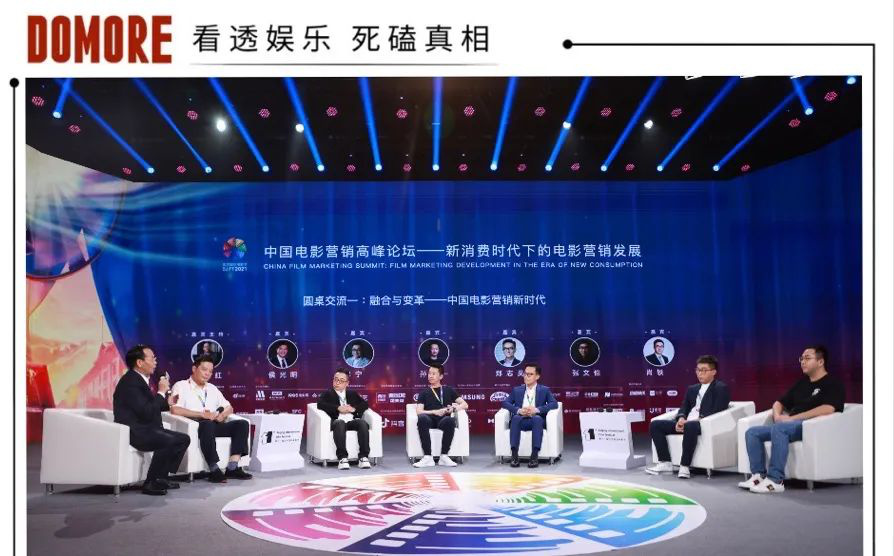
In the new era, film marketing broadens the space.
The film market ushered in a long-lost recovery in the National Day file.
The Battle at Lake Changjin, the head blockbuster, has already sold more than 100 million yuan at the box office the day before its launch, breaking 12 movie history records, such as the single-day box office of China’s film history drama. At present, the cumulative box office has exceeded 1.6 billion. "My Father and I" followed closely, and the box office also broke 100 million for three consecutive days.
Due to the special schedule, patriotic blockbusters were given high hopes of "saving the market". And "letting the audience enter the cinema" is not only the reason why the National Day blockbuster has attracted much attention, but also the role of film marketing in the whole industry.
Whether targeting the target audience or spreading the word-of-mouth before screening, the whole process of film release is inseparable from the role of film marketing.
China’s film market has achieved the first place in the global box office last year, and is moving towards a new stage of development. The revolutionary changes brought by big data and short videos in the field of film marketing also need further discussion and exchange.
On September 25th, at the 11th Beijing Film Festival Marketing Summit Forum hosted by Beijing International Film Festival Organizing Committee, hosted by Beijing Film Academy and co-organized by Film Knowledge School, Hou Guangming, former Party Secretary of Beijing Film Academy and Secretary General of National Film Think Tank, Li Ning, Senior Vice President and CEO of Xinli Media, Sun Zheyi, President of Sunac Culture Group, Zheng Zhihao, CEO of Maoyan Entertainment, Zhang Wenbo, founder of Bole Marketing, and Xiao Yi, head of content cooperation in Tik Tok, shared the new era, the development, changes and future of film marketing.
The following is the arrangement of poisonous eyes’ speeches on the forum-

Hou Guangming: Marketing is equivalent to giving the audience a reason to enter the cinema.
The first change is a change in meaning.
In the traditional sense, marketing is only about selling films. I just need to sell the films after they are finished. Now marketing is an activity that covers all aspects of the film industry chain and goes deep into all levels. With the blessing of technology, it goes into all links.
To put it in a popular way, marketing is equivalent to giving the audience a reason to go to the cinema to see a movie. This reason is not simply given, but after the early creation and production, the whole process of filming is actually creating this reason, so with the blessing of technology, marketing can now enter all links.
For example, from the beginning of film planning, the target market is locked according to the analysis of big data, and then personalized, implanted with corresponding cultural elements, and even corresponding stars, and the corresponding plot is improved according to the needs of the audience. The production stage and distribution stage are also carried out according to the characteristics of the stage and the task of marketing.
The significance to the enterprise is to maximize the value of the film. China is now moving from a big country to a powerful country. Our movies are getting bigger and bigger in box office and production. In a sense, the risks are getting higher and higher and the competition is getting more and more fierce. This requires our marketing to accurately locate and personalize.

Second, the thinking of film marketing has also changed greatly. In the past, it was simply selling films, but now the film marketing thinking is more integrated and in-depth, and there is even cross-industry marketing.
Take this year’s Spring Festival as an example. Almost many films and all films are distributed across borders, including logistics, real estate, games and so on.
The third important change, I think, is the change of marketing channels. From traditional media to new media to all media, the time and speed of change are getting faster and faster.
Last year, due to the impact of the epidemic, including the blessing of technology, it quickly switched from offline to online, such as cloud announcement, online and offline roadshows, and almost all film industries.
The last important change is the socialization and precision of the whole marketing model.
The audience in China is very mature now. They are no longer superstitious about big directors, big IP and big stars, but they believe in their own impressions and friends’ impressions. Therefore, the word-of-mouth of friends and the rating on the Internet are very important. I think we have had a lot of experience in this precise creation.
Of course, the new methods in the middle also have a crooked path, which deserves our attention in marketing. For example, we can’t talk about heroes purely by traffic, we can’t be entertained, and we shouldn’t violate some marketing ethics to do something we shouldn’t do.

Li Ning: The essence will not change, let the emotions touch the audience.
Now our film marketing, whether in the traditional era or the new consumption era, in fact, the film marketing is a kind of packaging and dissemination around the content of the film.
Personal understanding of the spread of film marketing is mainly about the type and emotion of the film. It is necessary to accurately tell the audience that the film is about to be released and what will attract you. Please go to the cinema to buy tickets, tickets and watch movies. This desire arises.

In terms of film marketing, the development now is gradually transparency. We still have to insist on conveying the true feelings expressed by the film content to the audience, so that we can truly gain the recognition of our audience.
This type of clarity allows the audience to gain the information conveyed by the film marketing more clearly, and only when it is released can these audiences who love our film be summoned, and then the word-of-mouth will be formed after the screening, which will drive the long-term distribution and promotion of this film.
Li Huanying, which we made during the Spring Festival, is a comedy, but it conveys Chinese feelings. The The Battle at Lake Changjin premiere that we are going to make in a while, and My Father and I, which will be released soon, is actually a film about feelings of home and country, war types and action types, which is a type of indoctrination.
Just now, Secretary Hou also said that the audience of China movies are increasingly picky and professional about the content of China movies, and they have a special desire to see good movies. At the same time, they have subdivided the types of movies. Many viewers may like a certain type, such as romance, comedy, war, action, police and gangster movies, which are more and more subdivided and more professional. Therefore, our marketing is required not only to innovate in form and content.
I insist that all forms of film marketing should constantly innovate and adapt to the changes of the market, the innovation of the trend technology and the changes of the platform. However, in essence, we will not deviate from it, but we should let the emotions touch the audience and let the audience really enter the cinema for the types, characteristics and true feelings conveyed by the nature of the film.

Sun Zheyi: Marketing is the whole accumulation and cultivation of IP.
Our travel team also visited the world a few days ago. Their first reaction was that all the equipment was much worse than ours, but IP was much stronger than ours, so the recognition of this kind of users was completely different. I believe that the global data is much better than ours. What we lack is IP.
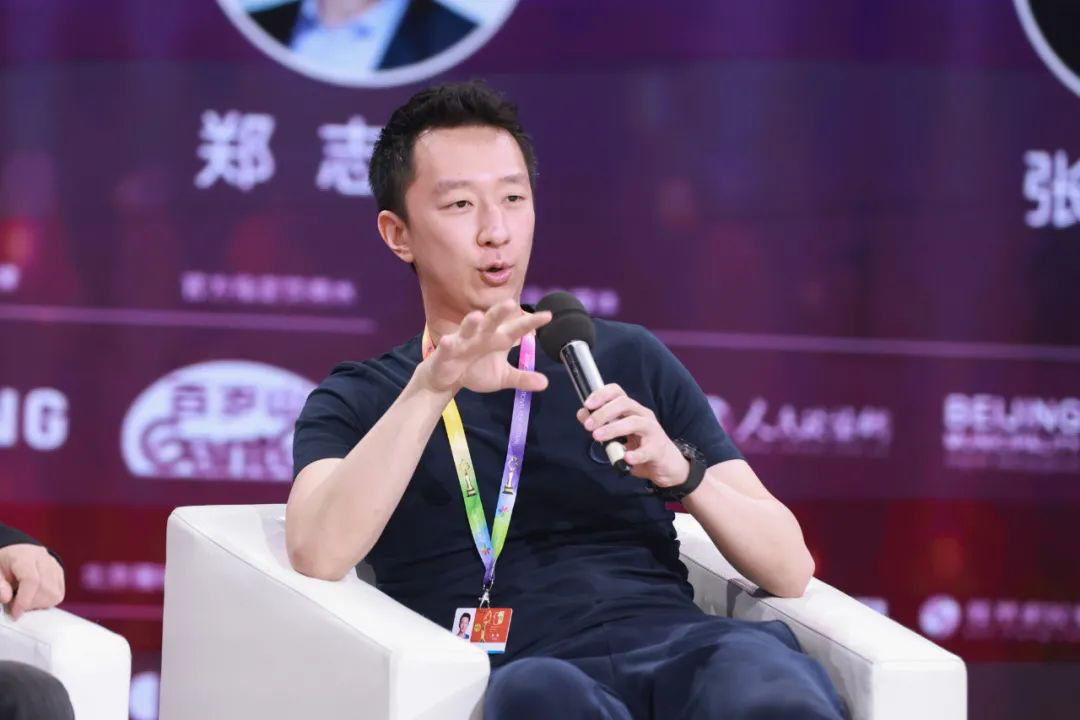
Just now, both Secretary Hou and Li Ning have mentioned a lot. Now, many publicity marketers are saying that the influence of marketing on the whole box office is actually not so great. In essence, it is whether the film is good or not and whether the film is what the audience wants. Therefore, we definitely need to put the marketing in front of content creation. We really need to know who we are selling to. When the project starts, we need to know who the film is sold to and how to sell it.
A few years ago, China basically followed the monolithic logic, but now it has seen that in the next three years, it will basically become a mainstream product line in China. The whole style of play should not regard the so-called marketing as a propaganda of a movie. In fact, marketing is the whole accumulation and cultivation of IP.
There will be a change in the future. There are more and more serialized movies and dramas now, which will lead to some changes in marketing actions in the future. Because in the future, it is not only a monolithic marketing logic, but also an IP marketing logic.
Second, I don’t think it’s wrong to cast a short video of Tik Tok and Aauto Quicker. The subsequent marketing model of IP will change, and short video is still a particularly big investment point.
We are looking at a data recently, that is, the data of Tik Tok e-commerce. Two years ago, their entire GMV was almost 50 billion, last year it was 1 trillion, this year it was 2 trillion, and three years later it was 10 trillion.
Tik Tok is our so-called second-class e-commerce, and the first-class e-commerce is only when I have a purchase demand. For example, Ali and JD.COM go to Ali and JD.COM to buy something when I want to buy it. Tik Tok actually inspires the logic of what you want to see. You don’t necessarily think you want to see it, or even you don’t necessarily think you want to see it, but Tik Tok has a large number of users and is very sticky. You can definitely see it when you brush Tik Tok, and you never know that the film is released or doesn’t want to see it until you want to see it.
Zheng Zhihao: Marketing should understand the content, the audience and the channels.
I sum up the changes in marketing cognition at this stage as "three understandings"
The first is "knowing the content". Now many marketing activities are pre-positioned and become part of the content.
We have a film with the theme of sports and running. The original name is "Starting", and the schedule has been fixed. But later, we found that the sports theme may not be able to reach consumers and reach the audience of the content well, so we later changed the name to "Great Dad" and chose to show it on Father’s Day. Different perspectives and marketing prepositions of the content have become the core and key to understanding the content today.
The second is to understand the audience. Mr. Hou also said before that we always say that there are data. In fact, whether there are data or not is not important. In essence, we understand the China audience.

There is a huge gap between the user portraits of China movie audiences and those of global users. Audiences in China have special needs for content, emotion, emotion and values, and they don’t just Follow something recognized by foreign countries, which may not work in China. Therefore, they should understand the national conditions of China.
The films we serve provide intelligent schedule selection, point-and-click selection, and suggestions on marketing points, such as schedule selection, whether to point-and-click, the location and people selected for point-and-click, and matching marketing channels. Today, we have some methodologies, and so do marketing points. In fact, the content of the same film may not be changed, but the choice of marketing points is actually biased.
There is a film with Li Ning, that is, "Serious Case of Anger", which is a typical action film and police film. Not long ago, it was Tanabata. On Tanabata, audiences in China, especially couples, needed to watch movies. In previous years, it was the mainstay of romantic films.
However, because in this user portrait, we saw a large number of female audiences’ goodwill and recognition of the director, and the width of female audiences’ viewing in the past year has continued to grow, all kinds of signs show that this can be done.
We did a lot of activities on Tanabata that day, including Nicholas Tse parachuting and watching Anger with couples. Anger hit a box office record two weeks after its release, which was unimaginable in previous Tanabata, so it is very important to understand the audience in China today.
The third is to know the channels. There are still many street sign TV advertisements in Hollywood today, but today, filmmakers in China have been able to make good use of the Internet, short videos, new media, various KOL and KOC, forums and channels with different characteristics.
Wechat has its own characteristics, bilibili has its own characteristics, and each channel has its own unique characteristics. We need to capture users’ interests and unique attributes based on the characteristics of this unique channel, so that they can really walk into the cinema.
Zhang Wenbo: Behind the channel change is the high efficiency of technology promotion and communication.
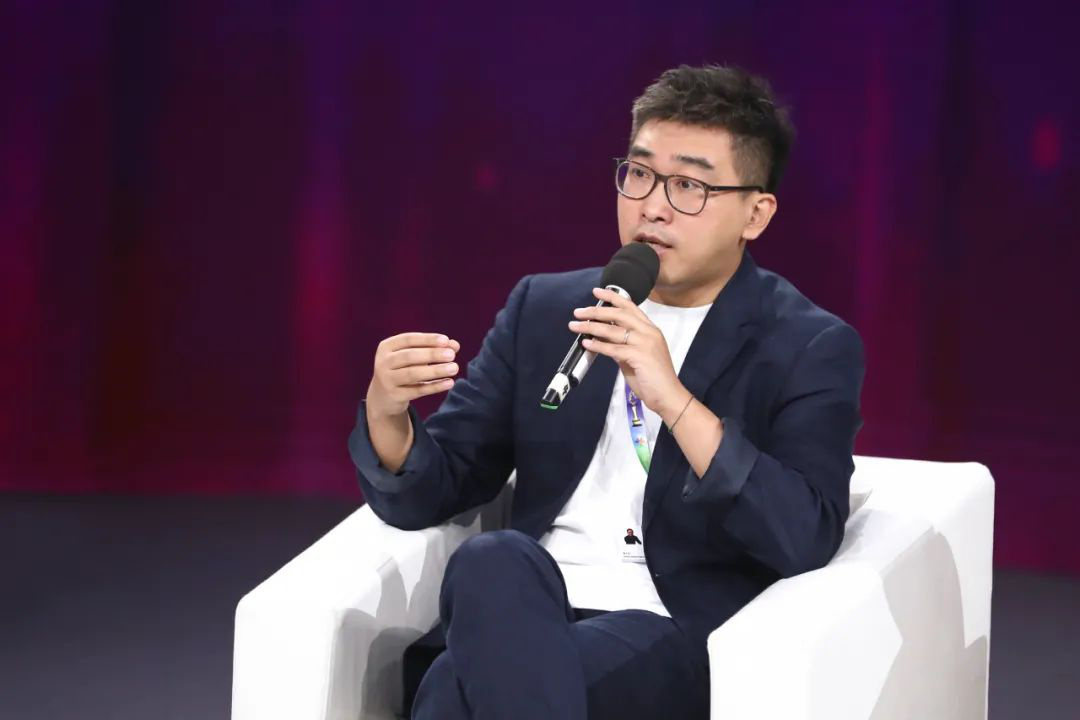
In fact, we simply divide marketing into two things: one is the output of content and the other is the distribution of content. Of course, our content refers to the secondary creation content, that is, the secondary creation based on the content of the film itself.
I went to the Beijing News in 2003. At that time, the film side took the initiative to invite reporters to participate in the press conference. It was necessary to give travel expenses and press releases to help you arrange interviews, so that you could publish this information in your newspaper, and it would be better to give a headline a big space. Because only in this way can the audience, audience, users and consumers know this information, and there is no more information.
By 2011, at that time, I had transferred from the media to the industry to engage in propaganda services. We made the film "Thirty-three Days of Broken Love". At that time, I had a strong feeling that the media-centric approach was gradually disintegrating and deconstructing, because that film should be the earliest way to spread on a large scale by social media in China.
Social media doesn’t need a so-called reporter or editor to help you edit and publish, and you can’t decide what content you want to publish. It depends entirely on the effectiveness of your own content to form a self-communication.
In fact, up to today, our whole communication logic is still the logic of content self-communication, but it has changed from words and pictures at that time to short videos now, but the audience’s information acquisition, sharing and discussion is actually based on a social logic, which is to consume this content as social money.
In 2019, I remember that the National Day was held in My People,My Country, The Climbers and The Captain, and Tik Tok began to play a huge role in the whole film marketing that year.
First of all, in that year, 30 or 40 films began to set up official tremors outside the micro-view, and continued to publish content on the official tremors. We were surprised to find that the broadcast volume of a short video may far exceed that in Weibo or any other channel, and the broadcast volume is accurate, because it is an intelligent recommendation and a way of directional communication, rather than passing by to see this exposure that may be invalid.
By last year, more than 80 films had official shakes, and there may have been hundreds of short videos with tens of millions of broadcasts a year, including selling tickets live last year and seeing applets this year. I believe the use of such applets will be a new boost.
Therefore, I think this channel is changing step by step from the era of traditional paper-based portal, to the era of social media represented by Weibo, and now to the era of short video represented by Aauto Quicker, Tik Tok. However, behind this channel change, it is actually the advancement of technology and making the whole communication more efficient.
Xiao Zhi: Short videos and algorithms bring more imagination.
As far as the platform is concerned, short video will change the technical level of film announcement, and I want to share a few points.
First of all, the production logic of materials. Most of the early promotional videos were put in pre-screening or outdoor advertisements, thinking that everyone was designing in a state of being able to read this for one or two minutes from beginning to end with a relatively devoted situation.
However, in Tik Tok, a passive, distribution and algorithm recommendation platform, all the shots in the first 20 seconds are mountains and rivers, and they are taken away without wanting to continue brushing, so the content that really attracts everyone to see behind may not be seen, so this also requires us to do new media and short video marketing, and we need to put more of these things in front soon.
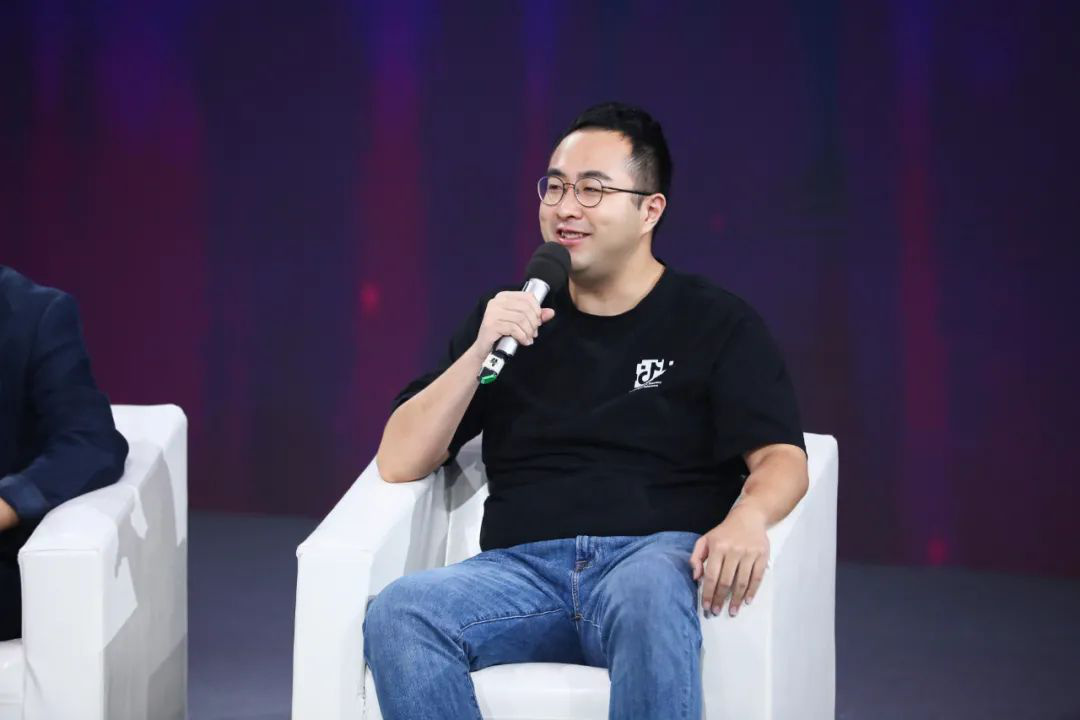
The second point is the change of communication link. The original film marketing is largely exposure logic, that is, 360-degree integration.
But Tik Tok as a whole is an explosion logic, because it has certain social distribution attributes, and the explosion video effect of one million likes is far better than that of 10,000 videos with 100 likes piled together.
For example, I sometimes brush Tik Tok in the office, because it’s for public viewing, and I don’t wear headphones. My colleague next to me said that you also brushed this video? I brushed it last night, too, and then the conversation started. Movies themselves are also a kind of social behavior, and people need to watch social talks. In this process, an explosion video is very important, and 10,000 or 1 million works are lost in the sea.
The third focus is form. Now Tik Tok is not only a platform for short videos, but also a rich user scene. But in fact, as a film, the publicity period is relatively short, in which the publicity period is one or two days before the screening, and the form of live broadcast is also very important, forming a nodal exposure with a relatively high peak value.
During the Spring Festival, we did a series of live roadshows, which were crowded at that time. After Andy Lau participated in the roadshow for one minute, the cat’s eye index should have increased by more than 7,000, which is also a very large instantaneous flow, which is why we think it would be better to apply various product forms of Tik Tok.
Under the blessing of the algorithm, the efficiency of the whole film marketing will be higher.
There are some distinctive types of films that will have a very high marketing efficiency in Tik Tok. Some types of films, fantasy films, the content will be very distinctive, very easy for creators and algorithms to learn, so the recommendation efficiency will be particularly high, so this type of film will accurately connect this kind of content to people who like to watch.
It was originally said that 50% of advertisers’ investment was wasted. I don’t know where it was wasted, and now it is wasted. It is impossible to be completely accurate, but this aspect of efficiency will be greatly improved.
Seeing a good short video content of film promotion will give you great motivation to learn more, and the playing interface of vibrato audio and video has given you interactive space in some product mechanisms: the anchor point in the upper left corner is an external chain, which can be linked to small programs or special ticket-grabbing activities, or to small games, so it gives many film producers and marketing companies more independent ways to promote, especially when the external chain is opened and transferred to private domain, as Zhang always said.
To put it simply, the combination of the algorithm and the product link actually has more room for extension in terms of efficiency and crowd accuracy.

Movies will not die, but the "adolescence" of the industry should be over.
Is it a good business to sell tickets live in cinemas?
